Directions
 Call Us
 Email Us



Key Takeaways
- Emsculpt is a non-invasive procedure that uses electromagnetic energy to sculpt muscles and reduce minor fat, whereas liposuction is a surgery that removes larger fat areas.
- Emsculpt involves no anesthesia or incisions and has an extremely minimal downtime, so it’s geared toward individuals close to their goal weight who are simply seeking more muscle definition. Liposuction is a single surgical treatment with a longer recovery time for removing major diet-resistant fat.
- Emsculpt requires several sessions spaced over weeks to produce visible muscle and modest fat changes. Liposuction frequently reveals dramatic contour changes following one surgery and weeks to months of healing.
- Sensations vary. Emsculpt feels like extreme muscle contractions and can cause light post-workout soreness, whereas liposuction comes with surgical pain, bruising, and swelling that may require painkillers.
- Long-term results are contingent on stable weight and healthy habits. Liposuction destroys treated fat cells for good, whereas Emsculpt’s muscle gains and fat reduction need ongoing maintenance and exercise.
- While combining treatments can be effective for some patients, using liposuction to remove bulk fat and Emsculpt afterward to define muscle tone is important. Candidacy should be discussed with a qualified provider.
Emsculpt vs lipo – answering how noninvasive muscle sculpting compares with surgical fat removal. Emsculpt sculpts the muscle and tones fat away via HiiT electromagnetic pulses over several sessions, whereas liposuction physically extracts fat in a single surgery.
Recovery times, risks, costs, and results differ. Emsculpt has minimal downtime and gradual change. Liposuction gives immediate contour change but needs healing.
The paragraphs below break down effectiveness, safety, cost, and candidate suitability.
Core Differences
Emsculpt and liposuction vary in fundamental methodology, invasiveness, anticipated recovery, and the ratio of fat versus muscle transformation. Emsculpt Neo is a non-invasive device that pairs electromagnetic energy for muscle building and fat reduction over time. Liposuction is an invasive procedure that literally removes fat through incisions and suction.
Here are a few specifics to help distinguish what each approach does, how it feels, and what outcomes you can anticipate.
1. The Mechanism
Emsculpt triggers supramaximal contractions through high-intensity focused electromagnetic (HIFEM) technology. These contractions are more intense than voluntary exercise and cause muscle fibers to respond, adapt, and enlarge. Adjacent fat cells receive stress signals that induce slow cell death and clearance by the body.
On the other hand, Vaser lipo breaks up and suctions out fat deposits with cannulas inserted under the skin. Surgeons might inject tumescent fluid or use ultrasound or laser assistance to loosen fat ahead of aspiration. The method actually plucks out fat cells, enabling exact shape alterations.
Emsculpt is unique in that it treats both fat loss and muscle gain. Average device data indicates up to approximately 25% fat loss and approximately 30% muscle gain in the targeted regions. Liposuction is purely for fat removal and can remove a greater volume at a time, frequently cited as being up to 2.7 to 3.6 kg (6 to 8 pounds) per session, depending on safety factors and the patient.
| Tissue effect | Emsculpt Neo | Liposuction |
|---|---|---|
| Muscle | Stimulates hypertrophy and strength gains | No direct effect |
| Fat | Causes apoptosis and gradual loss | Immediate physical removal |
| Precision | Good for general tone | High precision shaping possible |
2. The Procedure
Emsculpt sessions are approximately 30 minutes in duration and do not require any anesthesia or incisions. They’re generally done in a series of typically 4 sessions over a few weeks.
In contrast, liposuction is performed in an operating room under local or general anesthesia and can last anywhere from one to multiple hours. Typically, one surgery accomplishes the intended fat removal, but multiple staged surgeries occur for large volumes.
Steps for Emsculpt include: Consult, mark area, have a 30-minute device session, repeat sessions, and follow-up.
Steps for liposuction involve: Preop assessment, anesthesia, infiltration, cannula suctioning, closure and dressings, postop recovery, and compression garments.
3. The Sensation
Emsculpt feels like extreme, quick muscle contractions like those experienced during a high-intensity workout. Most people find it uncomfortable but not painful. Patients go back to normal activity right away!
In contrast, liposuction induces intraoperative sensation numbing from anesthesia. Postoperative pain, soreness, swelling, and bruising are common and may last weeks. Mobility restarts on a sliding scale, and complete comfort can be months away.
4. The Outcome
Emsculpt produces enhanced muscle toning and mild lipolysis observed incrementally. Visible change can take months, perhaps 6 months or more. Outcomes need tune-ups.
Liposuction provides more significant and rapid fat elimination and shape transformation, yet inflammation can obscure the outcome for weeks to months. Side effects differ: liposuction has higher risks of swelling, redness, and soreness. Emsculpt has minimal side effects when used correctly.
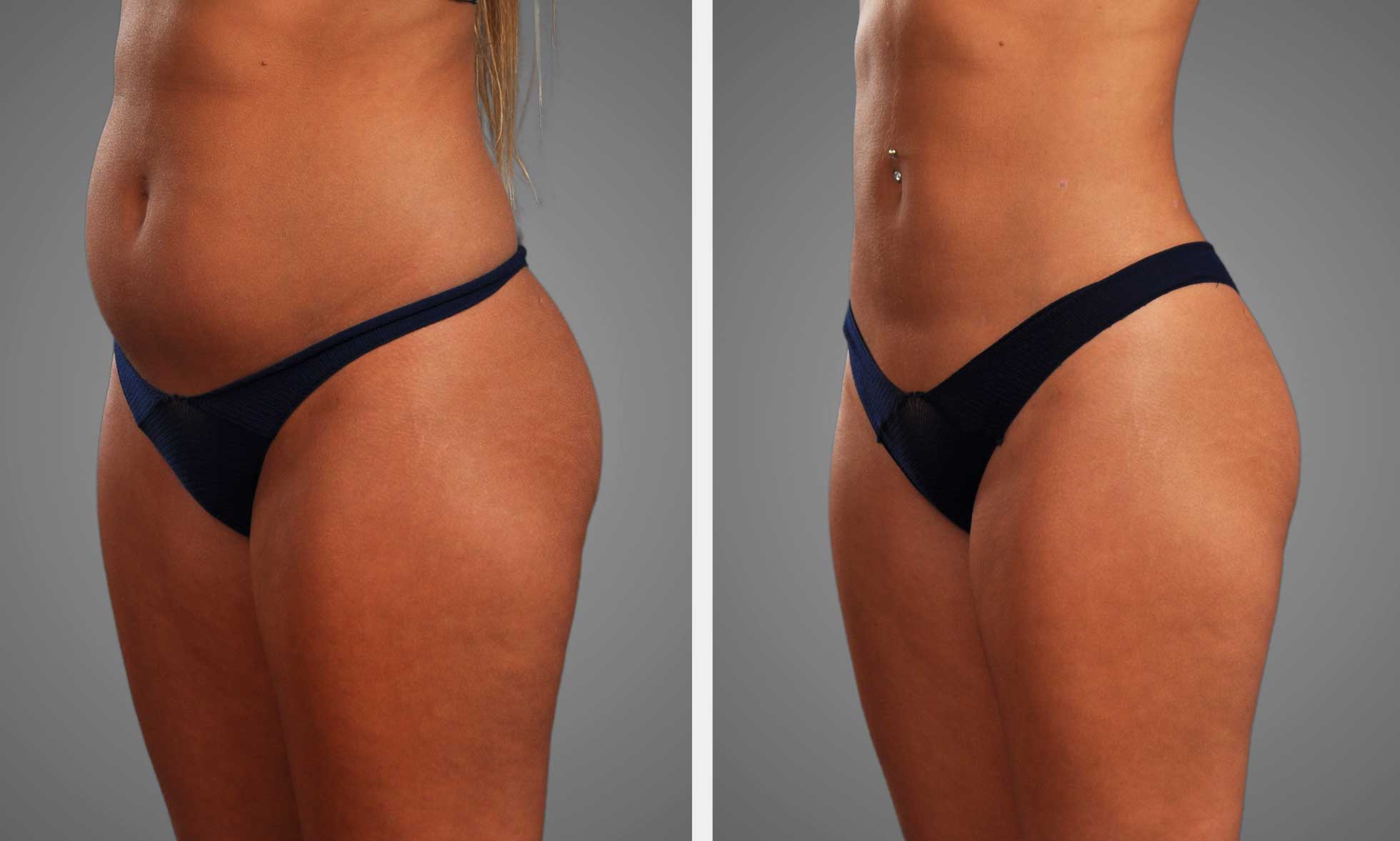
Emsculpt results in firmer muscle tone, subtle slimming, and delayed peak results. Liposuction involves marked fat volume loss, precise shaping, and quicker visible change once swelling settles.
5. The Timeline
Emsculpt requires multiple 30-minute sessions spaced out over a few weeks, with its full effect accumulating over the span of months.
Liposuction is a one-time 1 to 4 hour surgery with days to months of recuperation. Costs vary: liposuction is roughly $2,000 to $8,000 per area, while Emsculpt packages are about $3,000 to $5,000 for four sessions.
Ideal Candidates
Emsculpt is ideal for individuals who are close to their target weight and seeking enhanced muscle definition as well as slight fat reduction. Candidates have usually already done the diet and exercise thing, yet still struggle to achieve visible abdominal or buttock definition. Emsculpt relies on high-intensity electromagnetic pulses to induce intense muscle contractions that both build muscle and burn some fat, so individuals with a healthy BMI and a stable weight will experience the most reliable outcomes.
Think of a gym junkie who can’t ever seem to achieve a flat lower belly or a post-baby mom looking to firm up a saggy buttock shape without going under the knife. Postpartum women with diastasis recti may benefit as the device can assist in tightening and strengthening separated abdominal muscles. A medical exam is required to determine appropriateness.
Liposuction is suitable for individuals requiring removal of larger, persistent fat deposits resistant to diet and exercise. These procedures physically suck fat cells out of areas like the stomach, flanks, thighs or under the chin. Perfect candidates are those with localized fat pockets and relatively good skin tone.
This includes a person with a concentrated fat bulge on the hips or midsection that remains stubborn despite weight loss or a person carrying fat in an area of the body disproportionate to the rest of their physique. Patients with substantial excess skin or pronounced loss of elasticity are typically better candidates for combined procedures, as liposuction alone may leave loose skin.
Neither Emsculpt nor liposuction are a replacement for weight loss or a healthy lifestyle. Both work most effectively when weight is steady and the individual continues with regular exercise and nutrition post-treatment. Candidates should have realistic expectations.
Non-invasive treatments like Emsculpt typically require multiple sessions and produce more modest changes. Liposuction gives more immediate volume reduction but comes with surgical risks and downtime.
The most important considerations when selecting a care option are your overall health, medical history, and treatment objectives. Those with bleeding disorders, active autoimmune disease, or certain cardiac implants may be poor candidates for either approach and require medical clearance.
Age and quality of skin play a role. Younger skin responds best to liposuction because it pulls tighter. Recovery tolerance matters. Choose a non-surgical route for minimal downtime and a surgical route if you need substantial fat removal.
Cost, sessions required, and acceptance of scars or temporary swelling also inform candidacy. A consultation with a qualified provider will evaluate anatomy, discuss medical history, and align a plan to realistic goals.
Recovery Journey
Recovery after Emsculpt and liposuction is different in terms of pace, intensity, and daily impact. Emsculpt has virtually no downtime and allows the majority of patients to return to regular activities immediately. Liposuction needs a recovery schedule that includes activity restrictions and phased milestones.
Post-procedure care and time to see results is drastically different between these two. Knowing what to expect can help set realistic expectations.
Downtime
Emsculpt patients can typically return to work and workouts right after a treatment. The final result may take a few months to come to the surface, but life goes on unscathed.
Liposuction patients typically require time off work ranging from days to weeks, based on the specific area treated and the volume of fat extracted. Complete recovery can take months, with most individuals arranging time off from their lives to accommodate swelling and discomfort.
Quick-reference downtime checklist:
- Emsculpt: None to minimal; resume normal activities immediately.
- Liposuction requires two to fourteen days off work for mild procedures and a longer recovery period for extensive cases.
- Expectation: Initial change is noticeable early. Final changes occur in 3 to 4 months as swelling subsides. Sculpting can continue fine-tuning for as long as 6 to 12 months.
Downtime expectations in short:
- Immediate: Emsculpt yes, Liposuction no.
- Return to exercise: Emsculpt on the same day, Liposuction after physician clearance often takes weeks.
- Long-term: Both may take months for final look.
Discomfort
Emsculpt is virtually painless. Patients generally experience muscle soreness similar to a hard workout, which fades in a day or two. No heavy duty pain killers are typically required.
Recovery from lipo is fraught with pain, bruising, and swelling. It’s often moderate to severe initially and demands medication, rest, and slow reintroduction to activity. Swelling and bruising are standard and can last for weeks, sometimes even longer.
Compare pain management:
- Emsculpt: Over-the-counter analgesics are rarely needed and no opioids are typically used.
- Liposuction: Prescription pain medicine is common in early days, then taper to OTC meds.
- Duration: Emsculpt soreness lasts hours to a few days, liposuction pain and bruising for weeks, with complete comfort months off.
Summary of typical discomfort levels:
- Emsculpt: Mild, short-lived muscle ache.
- Liposuction: Moderate to severe early pain, prolonged bruising and swelling, and gradual improvement over weeks to months.
Aftercare
Emsculpt necessitates minimal post-procedure care other than general self-care. Hydration, light stretching, and normal activity aid recovery. Patients should remember that although daily life does indeed pick up immediately, significant body change can take a couple of months to manifest.

Liposuction aftercare is more complex. Compression garments are worn for weeks, wounds require tending and observation, and movement is restricted. There is swelling and bruising that requires follow-up. Some of our patients experience most of their change by three to four months, but final refinement can take six to twelve months.
Aftercare checklist — Emsculpt:
- Hydrate well.
- Light stretching if sore.
- No special garments.
- Follow-up as advised.
Aftercare checklist — Liposuction:
- Wear compression garments for weeks.
- Wound care and dressing changes.
- Limit heavy lifting and exercise for weeks.
- Follow-up visits to check swelling and healing.
Lasting Results
Both Emsculpt and liposuction can provide permanent results, but those results are a combination of the procedure and what the individual does post-procedure. Because liposuction excises fat cells from treated regions, those particular cells never come back.
Emsculpt sculpts muscle and burns some fat via metabolic effects, and its muscle results generally maintain if the person maintains physical activity. Your individual factors — baseline body composition, skin quality, genetics and lifestyle habits — determine how long results linger. Results can last anywhere from months to years.
For some, there are near-permanent shape shifts; for others, there are follow-up care or lifestyle adjustments necessary to maintain the look.
Permanence
Liposuction eliminates the fat cells in the treated areas permanently. What that means is the volume that comes out won’t grow back in as new fat cells in that same location. Other fat cells can simply get bigger if you increase the calories, so shape can still shift with weight gain.
Emsculpt modestly reduces local fat and induces muscle fiber hypertrophy and tone. It does not remove fat cells like liposuction. Muscle gains can wash away over weeks to months of disuse.
Strength and tone stay best when accompanied by occasional strength training or Emsculpt sessions. Weight gain following either therapy impacts outcome. Post-liposuction, excess weight could accumulate in other areas of your body and create unevenness.
After Emsculpt, fat can creep back and muscle can fade if you become inactive. Liposuction is more permanent for fat reduction, but Emsculpt provides maintainable functional gains for muscle enhancement. Both demonstrate enduring results in conjunction with consistent weight management and exercise.
Maintenance
Periodic Emsculpt sessions maintain muscle definition and the small amount of fat loss it provides. A few clinics suggest a maintenance treatment every 3 to 6 months based on activity and objectives. Weight lifters or core workers may require fewer touch-ups.
Liposuction typically doesn’t necessitate follow-up procedures to preserve the localized fat reduction. It does necessitate a commitment to healthy habits. A balanced diet, exercise, and weight monitoring are necessary to maintain the sculpted shape and avoid fat redistribution.
A practical maintenance schedule: start with an initial Emsculpt series, then assess at three months. Plan a single maintenance session every three to six months if activity is low, or skip if strength training is consistent.
Lifestyle tips apply to both: aim for stable weight, eat a nutrient-dense balanced diet, do regular aerobic and resistance exercise, get adequate sleep, and monitor changes with periodic photos or measurements.
The Synergy Effect
About The Synergy Effect: Pairing liposuction and Emsculpt can optimize fat elimination and muscle definition by allowing each technique to do what it does best. Liposuction extracts deep and bulk fat from larger pockets, altering the contour. Emsculpt sculpts and strengthens muscle and aids in fat loss from powerful muscle contractions. Together they can produce a result that is smoother, tighter, and more defined than either alone.
Liposuction debulks fatty deposits resistant to diet and exercise first. It is most effective in areas where fat volume causes bulges or pockets to be seen, like the thighs, flanks, and abdomen. Once healing is well in play and swelling has subsided, you’re left with the contours and small imperfections.
Emsculpt follow-up after that time can tone those contours by building underlying muscle and definition. This sequence of surgery first and device-based therapy second provides the surgeon with a blank slate to sculpt and the patient with a more chiseled appearance as muscles develop.
Clinical and device studies support tangible results when therapies are combined. Reported results consist of approximately 25% fat loss and around 30% muscle gain in treated areas, figures that represent averaged experience across trials and clinics. Certain studies combining RF and HIFEM even demonstrate up to 30% fat loss per combined modality session.
Those figures help explain why some people opt for both procedures: liposuction for bulk removal and Emsculpt for muscle tone and skin tightening. Effective ordering and timing count. Common protocols begin with liposuction, provide a post-op recovery window of weeks to months depending on the magnitude and healing process, and then initiate Emsculpt treatments.
A typical method is to wait a minimum of four to twelve weeks post-lipo in order to minimize risk and make sure all swelling has subsided. Emsculpt protocols usually entail several treatments a few days apart for optimal muscle hypertrophy. Providers customize timing to your healing, skin quality, and aesthetic goals.
Situations where the combined approach shines include patients with mild central adiposity who desire enhanced abdominal definition, individuals with stubborn fat deposits alongside weak underlying musculature, and those after a more transformational body change than either technique alone can provide.
Combining treatments allows precise sculpting. Liposuction changes volume and silhouette. Emsculpt sharpens lines and firms skin by boosting muscle and reducing residual fat. For most, this more holistic path yields more dramatic, longer-lasting shape enhancements with fewer trade-offs.
A Personal Perspective
I found it helpful to start by naming what I want: more muscle tone, less fat, or both. Emsculpt aims its power at muscle with high-intensity electromagnetic pulses and it can burn through some subcutaneous fat, too. Lipo sucks fat out immediately and can contour areas more aggressively. Consider where you desire transformation and the speed at which you require it.
Think about everyday and boundaries. Emsculpt sessions are approximately 30 minutes, so they can be squeezed into a lunch break. Most interventions require four to six sessions spread across days or weeks. Most individuals experience a firmer sensation to the abdomen and buttocks after the first treatment and may feel muscle soreness like a workout.
Liposuction needs more front-loaded recovery. Swelling and bruising can last weeks, you will likely wear a compression garment for two to four weeks, and you must avoid some exercises during healing. If downtime isn’t your thing, Emsculpt is more convenient to squeeze into a hectic schedule.
Consider pain, risk, and outcome. Emsculpt noninvasive risks are low, soreness is common, and serious complications are rare. Clinical evidence shows an average 16 percent increase in muscle and an average 19 percent decrease in subcutaneous fat across multiple trials; these are good guidelines but no promises.
Liposuction offers faster fat removal and more dramatic contour change, but it comes with surgical risks, a longer recovery period, and unpredictable skin response. Certain individuals have stubborn swelling or contour irregularities post-liposuction. Therefore, select a skilled surgeon and maintain reasonable expectations.
Link upkeep and work to your routines. Emsculpt can enhance a workout regimen and inspire improved nutrition and exercise. Improvements disappear if you quit moving. Liposuction eliminates fat cells permanently from treated areas. Weight gain will cause your fat to shift to other places and impact your long-term shape.
Both are aided by regular exercise and weight management. If you’re after a one-time fix with on-site resculpting, lipo might be right. If you like slow tone and minimal downtime, Emsculpt might be a better match.
Personal checklist to decide: clarify your main goal (tone versus removal), set acceptable downtime, note pain tolerance, check budget and access to qualified providers, confirm commitment to follow-up care and exercise, and weigh combined use if you want both muscle build and targeted fat removal.
Body contouring encompasses a wide range of techniques, and the right choice for you hinges on how you weigh instant versus incremental transformation, surgical versus nonsurgical labor, and transient downtime versus permanent architectural shift.
Conclusion
Emsculpt vs liposuction: How are different ways to shape the body. Emsculpt shapes muscle and trims fat without incisions. Liposuction extracts fat with surgery and provides immediate, high volume transformation. Emsculpt is useful for people with mild fat and good muscle tone. Liposuction feels more direct for those with more fat or loose skin.
Consider results, recovery, cost, and complications. Somebody who desires a toned tummy and a long weekend might choose Emsculpt. Someone who requires a significant fat reduction in a single treatment would likely choose liposuction. Others opt for both for stronger muscle and cleaner contours.
If you need assistance comparing alternatives, schedule a consultation with a trusted clinic or board certified surgeon.
Frequently Asked Questions
What is the main difference between EMSCULPT and liposuction?
EMSCULPT sculpts lean muscle and melts away fat with electromagnetic energy. Liposuction removes fat cells surgically. One is noninvasive with no incisions; the other is operative and literally sucks out fat.
Who is the ideal candidate for EMSCULPT?
Individuals close to their ideal weight seek increased muscular definition and mild fat reduction. It is perfect for avoiding surgery and downtime.
Who should choose liposuction instead of EMSCULPT?
For those with larger, localized fat deposits who want to remove the fat permanently, ideal candidates are in good health and have reasonable expectations about surgical downtime.
How long is recovery for each treatment?
EMSCULPT has no downtime. You return to normal activity right away. Liposuction requires days to weeks of recovery, depending on the extent and surgeon recommendations.
How long do results last for EMSCULPT and liposuction?
Liposuction results are long-term if weight is maintained. EMSCULPT results can last months to years with regular exercise and healthy living.
Can EMSCULPT and liposuction be combined?
Yes. Others utilize liposuction for mass fat extraction and follow up with EMSCULPT to sculpt and tone muscle. Talk to a provider about sequencing.
Are there risks or side effects I should expect?
EMSCULPT side effects are mild, like muscle soreness. Liposuction risks include bruising, swelling, infection, and contour irregularities. Always consult a board-certified clinician for personalized risk assessment.