How many treatments
does it take to clear an area?
2-5
Should I expect
to be hair free in the treated area after the series of treatments?
You can expect to be about 95% free of hair after five treatments. Any
remaining hair will be wispy and insignificant. No laser gets better
results than Gentle Lase.
Is laser hair
removal permanent?
Laser hair removal has been in use for some time, and stable hair loss
has been reported as far back as seven years, however "permanence"
cannot be claimed at this time.
Why does the
hair appear to still be there, and why will it look like it's growing
for 1-3 weeks post treatment?
The laser does not remove the hair at the time of treatment, but the
hair will fall out, or be "shed" 1-3 weeks after treatment.
Why does the
laser not work well on blond, gray or red hair?
The laser energy interacts with pigment or "melanin" in the
hair root, and these hair colors either don't have much/any melanin
in them, or it is of a type (pheomelanin) that does not absorb light
as well as the other form of melanin (eumelanin).
Why must patients
not use any form of epilation for 6 weeks prior to treatment with the
GentleLASE?
The hair root has to be present for the laser to work. If the patient
has removed it with waxing, plucking, or electrolysis, then there is
nothing for the laser energy to interact with.
Why must tanning
be avoided for 6 weeks before and after treatment?
Sun-tanned skin decreases the effectiveness of the treatment. It also
makes it more likely that the patient will experience darker skin (hyperpigmentation),
lighter skin (hypopigmentation) or blistering from the treatment.
Why must the
area to be treated be shaved just prior, or up to 2 days before treatment?
Surface hair, if present, will be singed off, increasing the risk of
a burn, as well as keeping energy from getting to the root of the hair
follicle.
Why must everyone
in the treatment room wear protective eyewear?
The GentleLASE is a high powered laser system, and can cause eye injury
if proper eyewear is not worn while the laser is used.
Can any area
of the body be treated?
Yes, with the exception of eyelashes, and shaping of eyebrows due to
the proximity of the eye and the danger of eye injury with a laser.
Does the treatment
hurt?
A sharp stinging sensation is felt after each pulse during treatment.
However, most patients who have waxed or had electrolysis report that
it feels less painful than those types of treatments. If the patient
thinks it is too uncomfortable, then the practitioner may provide a
topical anesthetic prior to treatment. Most patients have no residual
pain within 20-30 minutes after treatment.
What are possible
side effects of laser hair removal?
Side effects can include blistering, darker skin (hyperpigmentation),
lighter skin (hypopigmentation) or scarring. Risks of these side effects
are minimized if the patient closely follows treatment instructions.
How long will
the treatments last?
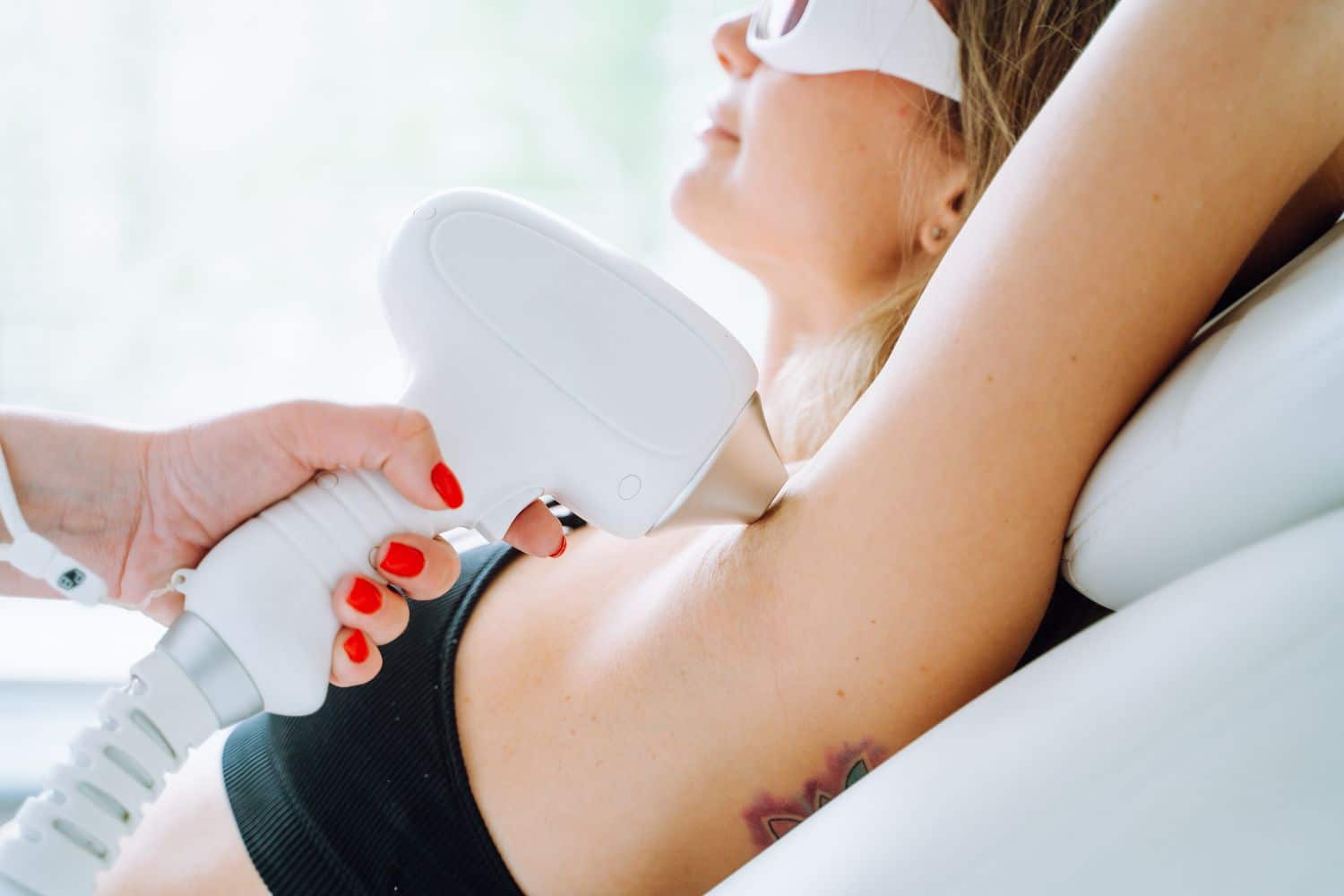
Depending on the area to be done, the treatment could last anywhere
from 1-2 minutes, to up to approximately I hour. Underarms, back of
the neck, and bikini areas are usually treated in approximately 2-5
minutes, while large areas like full legs and a full back can take up
to an hour.
What will the
treated area look like after treatment?
The skin in the treated area will have some redness (erythema), and
the hair follicles will "welt" up, looking like goose bumps
on the skin for approximately 1-2 hours. This effect can last for up
to a couple days in some patients.
How long will
it be before I notice re-growth in the treated area?
Depending on the individual, the treatment parameters, and area of the
body involved, it may be anywhere from 2-4 months before any re-growth
is observed.
What
is a "test area", and why is it performed?
"Test areas" are small areas of skin that are treated at various
laser energy levels prior to treatment of large surface areas on darker
skin types. "Test areas" are done on darker skin types to
determine the level of energy that is best for that individual. Light
skin types, generally don't have to have test areas done, but that is
determined by the practitioner.
|