Directions
 Call Us
 Email Us



Key Takeaways
- Understanding the differences in recovery between J-Plasma and tummy tuck procedures.
- J-Plasma offers a minimally invasive option with shorter recovery and less discomfort. Tummy tucks provide comprehensive results for those with significant skin laxity and muscle concerns.
- Tummy tuck recovery usually means more pain, more downtime, and scars, whereas recovery with J-Plasma is faster and less invasive.
- Post-operative care with compression garments, light activity, and good nutrition is important for the best outcome in both treatments.
- Emotional, financial, and lifestyle aspects weigh heavily on the recovery experience and overall gratification.
- It’s crucial to consult with a board-certified plastic surgeon to determine what procedure is best for you, given your goals, anatomy, and daily lifestyle needs.
J-plasma vs tummy tuck recovery — both need time, but are different lengths, pain, and aftercare.
J-plasma, a less invasive skin tightening method, often results in mild swelling and quicker healing.
Tummy tuck recovery, post-op from cutting away surplus skin, can take weeks with additional restrictions on activity.
Both have care steps, risk of bruises, and doctor visits.
The following sections highlight important information, recovery, and what aids healing for each option.
Understanding Procedures
J-Plasma vs tummy tuck, for those seeking a firm, flat abdomen. Both can alter the appearance of the physique, but they do so via different mechanisms and have different recovery periods associated with them. It depends on how much loose skin or fat you have and how much downtime you can handle.
Liposuction is often involved in both, particularly if fat reduction and contouring is a goal.
| Factor | J-Plasma (Renuvion) | Tummy Tuck (Abdominoplasty) |
|---|---|---|
| Invasiveness | Minimally invasive | Surgical (invasive) |
| Anesthesia | Local or light sedation | General anesthesia |
| Scarring | Minimal, tiny incisions | Moderate to significant |
| Skin Tightening | Up to 50% (compared to excision) | Maximal, by removing skin |
| Recovery Time | 1–2 weeks (mild swelling/soreness) | 2–4 weeks |
| Fat Removal | Needs liposuction | Often includes liposuction |
| Best For | Mild sagging, small areas | Large laxity, excess skin |
J-Plasma
J-Plasma utilizes cold plasma to energize tissues below the dermis, stimulating the body to produce new collagen and tighten the site. This technique delicately lifts minor slack without excising skin.
The device’s probe is flexible but not strong, which is why doctors typically perform liposuction first to create room for it to slide beneath the skin. This lets J-Plasma get to the correct areas for a flawless, uniform finish.
Most people experience minimal pain with J-Plasma, far less than with open surgeries. There’s some swelling and soreness afterward, but it usually only lasts a week or two. No big cuts or deep wounds result in less chance of major scarring.
The primary side effects are swelling and soreness, but these are typically mild and transient. The fast healing is a huge attraction for a lot of people. In fact, they can sometimes get back to normal within days.
This is great for anyone who doesn’t want extensive time away from work or home. J-Plasma is great for those smaller trouble spots. It can firm skin on the belly and works best when sagging is mild.
Individuals with a great deal of loose skin or deep folds may not get enough tightening with this by itself.
Tummy Tuck
A tummy tuck is way more involved. It eliminates excess skin, fixes weak or stretched muscles, and might remove fat through liposuction. The surgeon cuts out a long incision, typically from hip to hip, to peel, crop, and sew the skin back down.
It really makes a difference, particularly after weight loss or pregnancy. The downside is scarring. The tummy tuck incision scar leaves a line, and doctors attempt to conceal it beneath underwear lines.
This scar may dim, but it almost never fully disappears. Softer recovery is slower. Most require two to four weeks free of intense work or training. Some require assistance with the everyday grind initially.
Swelling, bruising, and soreness may persist for weeks. For those with excessive loose skin and large bulges, a tummy tuck is many times the only way to achieve a flat, tight belly. It delivers compelling results where less invasive alternatives fail.
The Recovery Timeline
Recovery after J-Plasma and tummy tuck surgeries each have their own paths. J-Plasma skin tightening usually has a shorter, milder recovery. Tummy tuck, known as abdominoplasty, is a more aggressive surgery with a lengthier recovery. Comparing the two sets clear expectations for those who are considering these treatments.
1. Discomfort
Pain post J-Plasma is generally minimal. Most experience tightness, swelling, and some mild stinging. These symptoms can typically be controlled with OTC pain relievers.
Tummy tuck recovery is more intense. Discomfort can include deep abdominal pain, tightness, and occasionally a pulling sensation. Prescription painkillers are typically required during the initial week.
Compression garments are key following both procedures. They assist with decreasing inflammation and support, but some individuals find them initially uncomfortable. It’s not unusual to be in these sheets for the entire day and night for at least the first week, and for tummy tuck they might be worn 6 to 8 weeks.
Call your healthcare provider if you experience any signs of severe pain, such as sharp pain, constant pain, or sudden swelling or fever.
2. Mobility
Life is somewhat restricted immediately post-tummy tuck. Getting up, walking, and even standing straight can all be hard during the initial few days.
J-Plasma patients are typically ambulating with greater ease and can often return to light activity within one week. Easy movement is key to both recoveries.
Short walks aid circulation and reduce the chances of blood clots. Movement becomes easier as time passes. After approximately two weeks, the majority can return to light exercise, although all activity is postponed until three months post-op.
Stay away from high impact workouts, lifting heavy objects, or stretching the stomach early on.
3. Aftercare
Both have some take care after. Maintaining clean wounds, using compression garments, and avoiding baths or swimming for a few weeks are typical.
Nutrition and hydration assist healing and reduce complications. Follow-up visits, typically within a week, monitor healing.
My patients know this: stay hydrated and eat protein and vitamins. Avoid heavy lifting and strenuous activities for a few weeks to prevent a setback.
4. Appearance
Swelling and mild bruising can occur after both treatments. J-Plasma can result in slight redness and crusting that dissipate within a few days.
A tummy tuck can lead to more significant swelling and bruising, sometimes for weeks. Looks get better.
The majority of swelling and bruising dissipates within a week, but subtle changes persist for months. It can take months before the results show. Scar abatement is necessary as scars from a tummy tuck may still be present.
5. Duration
J-Plasma recovery is briefer—most return to their regular activities within a week. Tummy tuck patients take longer, returning to most activities after two weeks and being fully cleared in about three months.
Recovery timeline varies based on your age, health, and aftercare compliance. Others could require additional treatments for optimal results. Patience is important.
Trying to hurry the process will only postpone or mess up healing.
Hidden Recovery Factors
Hidden recovery aspects from J-Plasma and tummy tucks. Each route has its own emotional, financial, and lifestyle implications that can color the journey in less than transparent ways. Patients need to know these factors in order to set realistic expectations and navigate a smoother recovery phase.
Emotional Journey
Recovery always starts with some combination of hope and stress. More often than not, patients experience emotional roller coasters after surgery. It’s natural to feel self-conscious about how you look, as you’ll see swelling and bruising in the days and weeks after.
Body image changes can trigger transient mood swings or even self-doubt, regardless if it’s J-Plasma or a tummy tuck. Backing for brain health is essential. Easy things such as talking to a counselor, joining support circles, or arranging weekly check-ins with good friends can really help.
For others, impromptu discussions with family or a trusted friend about anxiety or lapses in recovery reduce tension. Self-care and patience give yourself the time you need to heal and understand that recovery itself is a process.
Financial Impact
- J-Plasma procedures can be cheaper than tummy tucks. Pricing depends on location, provider, and if liposuction is included.
- Tummy tuck can be more expensive, particularly with hospital costs, anesthesia, and aftercare appointments.
- Insurance could cover a tummy tuck for medical reasons like hernia repair. Most cosmetic cases are out-of-pocket.
- Others provide payment plans or medical financing, which increases the availability of both to patients across the globe.
- Take into account long-term expenses, such as follow-up care, scar therapies, and potential touch-up treatments prior to deciding.
Lifestyle Influence
Good habits, such as eating right and exercising, have a huge impact on the speed and quality of recovery. Being near your ideal weight and having no serious health issues is crucial for optimal results and less risk.
Work, family, and other day-to-day responsibilities could point a person in the direction of J-Plasma, which has a lighter recovery, or a tummy tuck, which is typically two to four weeks off work. Any recovery demands change, sometimes minor, such as seeking assistance for chores, and occasionally grander, such as changing workouts or vacations for months at a time.
Other individuals find it more natural to communicate their recovery requirements and boundaries to their support system. This aids them in adhering to doctors’ directives and preventing relapses.
Visual Results
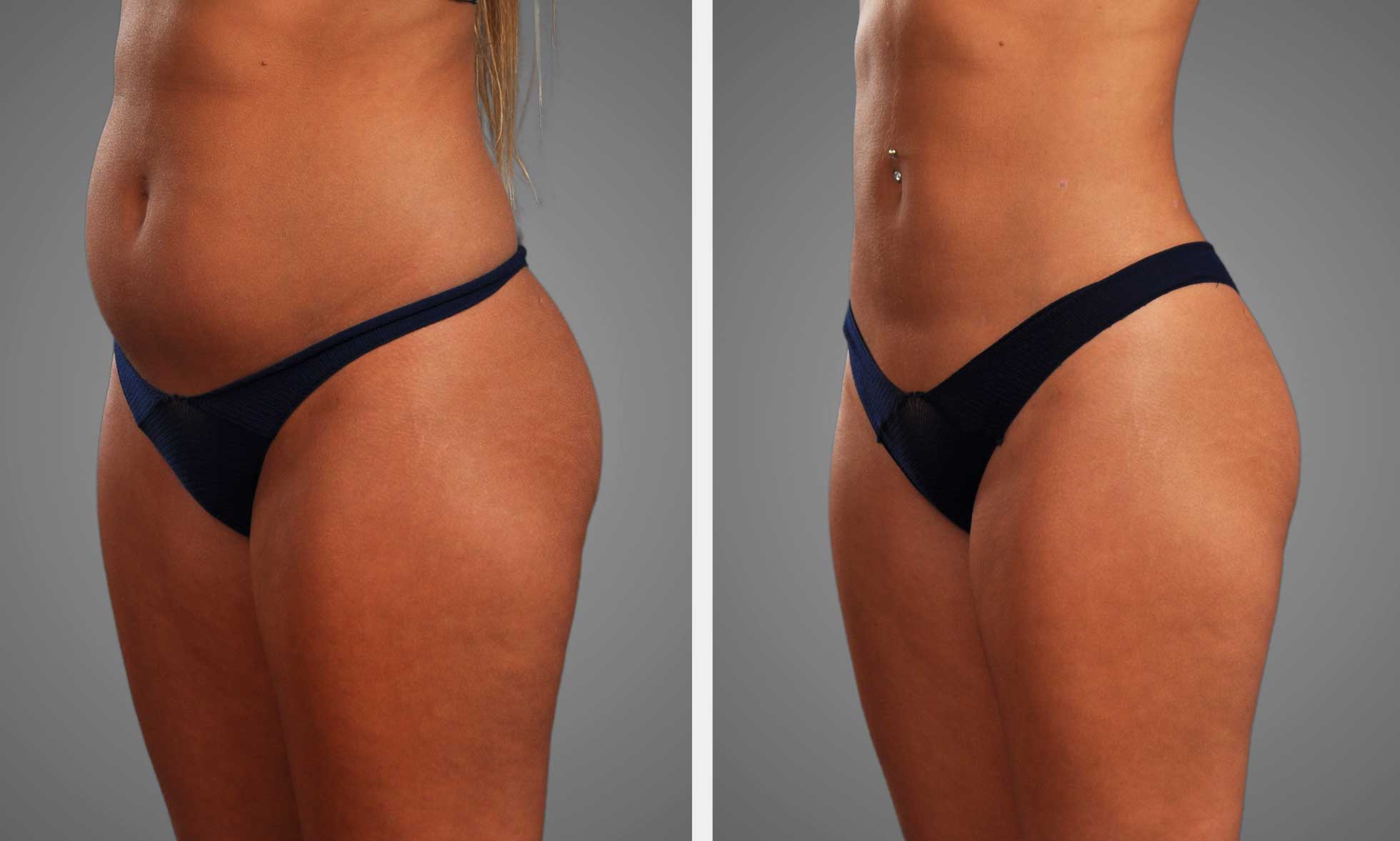
Visual Results – J-Plasma and tummy tuck procedures have very different visual results, particularly when it comes to skin quality, scarring, and the final abdominal contour. Both treatments employ different approaches to address skin laxity and contour. The invasiveness and post-treatment appearance can differ significantly. Below, this table compares visual results side-by-side for both options.
| Feature | J-Plasma | Tummy Tuck |
|---|---|---|
| Skin Quality | Smoother, tighter, less crepey | Tighter, sometimes firmer |
| Scarring | Minimal (small punctures) | Significant (long horizontal scar) |
| Immediate Results | Visible day of treatment | Visible after swelling subsides |
| Skin Tightening | 20-40%, improves for months | Dramatic, mostly immediate |
| Collagen Response | High, ongoing remodeling | Some, but less than J-Plasma |
| Final Contour | Subtle, natural | More sculpted, dramatic |
| Longevity | Years with proper care | Years with proper care |
| Patient Satisfaction | 85-95% | High, varies by surgeon/technique |
Skin Quality
J-Plasma applies precise, cold thermal energy to the stomach skin, prompting instant contraction and sustained remodeling. That’s why the skin typically appears and feels tighter immediately post-treatment, with ongoing enhancement over the following months due to boosted collagen synthesis.
Patients typically observe less lax or crepey skin, and the average tightening of treated areas is between 20 and 40 percent. The expansive canvas of the belly facilitates uniform treatment.
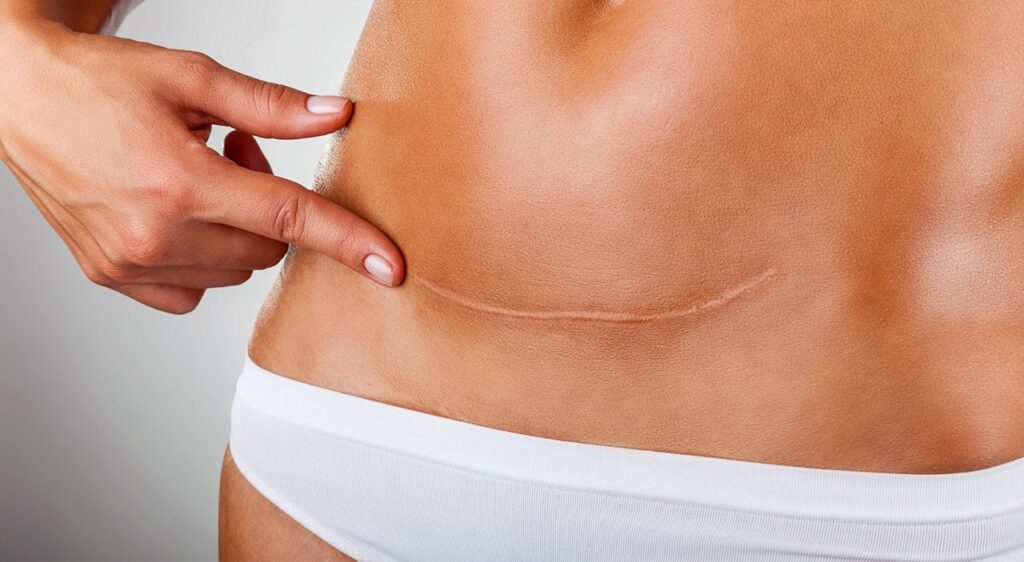
Tummy tucks not only remove extra skin but can correct stretched or separated abdominal muscles. This two-pronged method enhances the exterior and can fortify the interior. While collagen production assists with healing, the influence on skin texture is not as pronounced as with J-Plasma.
Both treatments provide some skin rejuvenation, but the pattern and extent vary by age, wellness, and skin type. Your skin, if it’s younger and healthier, will respond best to plasma energy.
Scarring
J-Plasma makes small incisions, so scars are very small and often barely visible after healing. Tummy tucks necessitate a lengthy incision over the lower abdomen, which leads to a more noticeable scar.
Plastic surgeons will strategically place and use layered closure techniques to make tummy tuck scars as thin and low as possible. Certain tapes, ointments, and sheets of silicone can help scars fade.
Good aftercare—keeping the area clean and protected—really plays a big role in both methods, particularly with larger incisions. Some darker or thicker skinned individuals can get very prominent scars, while others may heal with fine flat lines.
Final Contour
Because a tummy tuck removes excess skin and fat, it creates a more dramatic change in contour by flattening and tightening the stomach area. The end result is typically a carved-out, tighter midsection that remains that way for years with the right maintenance.
J-Plasma sculpts the abdomen by firming up the skin rather than extracting it, creating a less obvious, more organic curve. It is most ideal for mild to moderate lax skin.
Having realistic expectations is crucial. Factors such as body type, muscle definition, and skin elasticity all contribute to the final result. For others, anatomy or previous surgeries may impact what is achievable, so the outcome can be distinct for every patient.
Making Your Choice
Deciding between J-Plasma and a tummy tuck comes down to your individual needs, body type and goals. Both options tackle loose skin differently and with varying recoveries. Consider your body, life and expectations before you make your decision.
Your Body
Begin by examining your own body type and your primary areas of concern. J-Plasma can be effective for those who have mild sagging or the beginning signs of loosened skin. This technique utilizes cold plasma energy to tense skin without cutting or extracting it.
J-Plasma typically fares best in conjunction with liposuction because its probe is weak and flexible and is ideal for delicate changes. Those with moderate to heavy loose skin might require a tummy tuck for a more potent outcome. This surgery removes excess skin and can transform the appearance of the abdomen in a more significant way.
It’s a forever change that loose skin is gone, never coming back. Get to know your anatomy. Certain physiques, such as those lean and less fatty with an abundance of loose skin, may not reap as many advantages from J-Plasma. If your weight has been relatively stable for some time, outcomes tend to be superior for both operations because significant weight fluctuations following surgery can impact results.
Your Lifestyle
Consider how much recovery time you can allocate. A tummy tuck typically requires more time away from work and daily activities, approximately 2 to 4 weeks, with restrictions on movement and lifting. That can impact folks with demanding work or family care obligations.
Recovery after J-Plasma is brief, with average patients experiencing mild swelling and soreness for 1 to 2 weeks. Active people or those who simply can’t take a long pause may prefer J-Plasma. Your schedule is important. If you have little kids, travel frequently, or can’t put the brakes on your work, a shorter recuperation may work better.
Some like to plan procedures on holidays or during slow work times, so look ahead at what suits your life. There’s a balance to be struck between matching the right recovery period with your commitments to avoid stress and promote optimal healing.
Your Goals
Know where you want your look to go before you decide. If you desire a subtle lift and do not have a lot of laxity, J-Plasma can firm and refresh the surface of your skin. Results develop gradually over 6 to 9 months.
If you want a bigger change with more loose skin, a tummy tuck can provide the lasting, immediate transformation you desire. Consider maintenance and how patiently you expect to wait for the complete outcome. If you’re worried about your realistic expectations, both alternatives have their advantages and disadvantages.
Pick the one that corresponds to what you most desire and how you want to feel once you’ve recovered. Comfort and long-term happiness should guide your pick.
A Personal Perspective
Personal anecdotes color our views on J-Plasma and tummy tuck recuperation. They provide real value, illustrating the highs and lows that numbers can’t. For most of us, getting a flatter stomach is difficult, even with nutritious food and frequent gym visits. Some opt for surgery, while others desire less invasive options. There’s no one answer for everyone, so listening to lived experiences is helpful.
J-Plasma and tummy tuck can both transform the way we feel about ourselves. Tummy tucks, or abdominoplasty in medical terms, eliminate extra skin and fat. The outcome is a more flat, hard appearance, but the operation requires longer to heal. Others develop swelling and require weeks of bed rest. Still, others say they can return to daily life in a month or two.
Others have reported that as their bodies healed, their confidence too blossomed, despite the initial weeks feeling rough. J-Plasma, frequently combined with liposuction, is unique. It employs cold plasma energy to tauten skin. There are fewer incisions and much smaller or non-visible scars. A lot of people report seeing firmer skin in a matter of weeks.
One individual reported smoother results after only two months, whereas another noted the most significant changes after six months. Research demonstrates J-Plasma can contract lax skin up to fifty percent more than excision. The decision between them is personal. Some desire powerful, rapid transformations and don’t fret about scarring. Others don’t want to face serious cuts or extended recovery.
Liposuction with Renuvion J-Plasma is best suited for individuals with mild to moderate loose skin. It is known as a “scarless” tummy tuck because it leaves minimal to no trace and accelerates recovery time.
Testimonials and experiences:
- ‘I chose a tummy tuck because I wanted a significant transformation. The initial month was tough. These days, I feel fitter and appear leaner.
- J-Plasma with lipo did the trick for me. I didn’t want scars and my skin looks better every month.
- My scores were a little slow in coming. As little as six months after J-Plasma, my skin was noticeably tighter.
- ‘Tummy tuck recovery was longer than I expected. I’m so glad I did it.’
- I liked both lipo and J-Plasma. The recuperation was simple and I received the appearance I desired.
As these personal tales make clear, healing is different for everyone. Certain individuals observe within weeks, while others postpone for months. All that fat or loose skin you have makes a difference. Folks desiring less downtime tend to favor J-Plasma, while those desiring more dramatic results will opt for a tuck.
When considering your personal route, consider your desires, ambitions, and downtime tolerance.
Conclusion
Whether J-Plasma or tummy tuck, we’re talking about two very different journeys to body transformation. J-Plasma provides a quicker bounce-back with less pain. Tummy tuck requires more downtime, but it can dramatically recontour the belly. Everyone recovers at their own rate. Factors such as age, health, and daily habits make a big difference with recovery. Photos and real life stories show the difference! To compare your options, consult a physician familiar with both procedures. Inquire candidly about pain, scars, and downtime. Examine your goals and daily living. Still need more assistance or want to hear more anecdotes? Contact a reliable expert or join the conversation with those who sampled both. Your next step can begin today.
Frequently Asked Questions
What is the main difference between J-Plasma and tummy tuck recovery?
J-plasma typically has a quick, non-intensive recovery compared to a tummy tuck. While every person and procedure is different, most patients bounce back more quickly after J-plasma than after a tummy tuck.
How long does it take to recover from J-Plasma compared to a tummy tuck?
J-Plasma recovery is usually around 7 to 10 days. Tummy tuck recovery often requires 4 to 6 weeks or more to heal fully.
Are there visible scars after J-Plasma or tummy tuck procedures?
J-plasma usually leaves little to no scarring. A tummy tuck surgery leaves a noticeable scar on the lower abdomen, although it generally diminishes with time.
Which procedure has more discomfort during recovery?
Tummy tuck recovery is much more painful with swelling and pain that extends over weeks. J-Plasma recovery is less painful and faster.
Can J-Plasma and tummy tuck be combined for better results?
Yes, some MDs combine J-Plasma and tummy tuck. This strategy should be reviewed with a professional physician for safety and appropriateness.
When will I see final results after J-Plasma or a tummy tuck?
J-Plasma results typically emerge within a couple of weeks, with ongoing enhancement for a few months. Tummy tuck results can take months for swelling to reduce and the final contour to emerge.
Who is a good candidate for J-Plasma versus a tummy tuck?
J-plasma is best suited for individuals with mild to moderate skin laxity. Tummy tuck is ideal for individuals who have excess skin or weakened abdominal muscles. A doctor can advise the optimal choice for your requirements.