Directions
 Call Us
 Email Us


Key Takeaways
- Combining liposuction with skin tightening provides a more comprehensive abdominal contour by eliminating resistant fat and enhancing skin tautness in one treatment regimen. This results in a sleeker, sculpted core.
- One combined procedure means one recovery period and less overall downtime, making post-op care and the transition back into your life easy.
- Bundled surgeries often mean lower total cost due to shared facility, anesthesia, and surgeon fees, which provides a better value than individual staged standalone procedures.
- By tackling skin laxity head-on in the primary procedure, it reduces the risk of requiring revision surgery down the road and promotes more durable visual outcomes.
- Thorough candidacy evaluation is critical and must encompass skin quality, localized fat volume, general health, and reasonable expectations to select the optimal methods.
- Enjoy lasting results through a clean lifestyle, daily skin care, and follow-up. Keep an eye out for risks like swelling, seroma, or infection during recovery.
Abdominal liposuction and skin tightening combination is a cosmetic approach that removes excess fat and firms loose skin in the midsection. The technique combines focused fat removal with energy or surgical skin tightening to enhance shape and minimize sagging.
Candidates typically have localized fat and mild to moderate skin laxity. Recovery times and results depend on the technique and patient factors. The body describes procedures, results, and recovery.
The Combined Advantage
Pairing abdominal liposuction with skin tightening provides a synergistic solution that addresses both loose skin and stubborn fat pockets in one treatment plan. This portion details how the combined processes enhance contour, decrease downtime, save expenditure, and minimize risk of subsequent operations while highlighting candidacy and modality selections.
1. Superior Contouring
When liposuction is combined with skin tightening, you get a sharper-looking waistline and more defined muscles. Focused fat elimination from the abdomen, flanks, and hips allows a surgeon to carve out natural curves and expose hidden musculature. High-definition liposuction can highlight a more chiseled figure when suitable.
The combined advantage of using VASER to emulsify fat prior to suction preserves fibrous tissue, creating a smoother finish, while adding on devices like Renuvion or BodyTite can tighten skin and minimize sag. Patients who lost large amounts of weight often benefit. Lipo removes the residual pockets of fat while energy-based tightening firms stretched skin, producing a smoother, more toned abdominal plane.
2. Single Recovery
Experience both phases in a single operative session translates to one convalescing window, not two. This minimizes overall downtime and makes it easier to plan around work and workouts. Post-op care is consolidated: a single course of compression garments, one set of wound-care instructions, and one timeline for follow-up visits.
While inflammation can be somewhat exacerbated when added tightening occurs, overall healing time rarely spikes appreciably. For many patients, this one-recovery approach translates to a quicker return to the gym and daily activities than if you staged the procedures months apart.
3. Cost Efficiency
The shared convenience and cost of combined procedures often reduce the overall cost compared to separate surgeries. Shared facility fees, one anesthesia date and consolidated surgeon time all helped defray costs. Practices will often package follow-ups or lymphatic massage at discounted rates when procedures are combined.
A straightforward table of standalone versus combined fees can help make decisions more transparent for patients balancing financial compromises and clinical advantages.
4. Proactive Tightening
Tackling skin laxity at the point of fat removal decreases the possibility of requiring subsequent skin excision. Active use of skin-tightening solutions increases elasticity and helps prevent excess folds that can plague some patients after liposuction alone.
Thermage or Renuvion, for example, can be combined with a lipo case to help prolong tone for less chance of a revision down the line.
5. Optimized Outcome
A combined approach custom-tailored to a patient’s anatomy often provides the most organic, long-lasting outcome. Personalizing the combination of lipo technique and tightening technology results in sculpted, harmonious contours and enhanced skin quality.
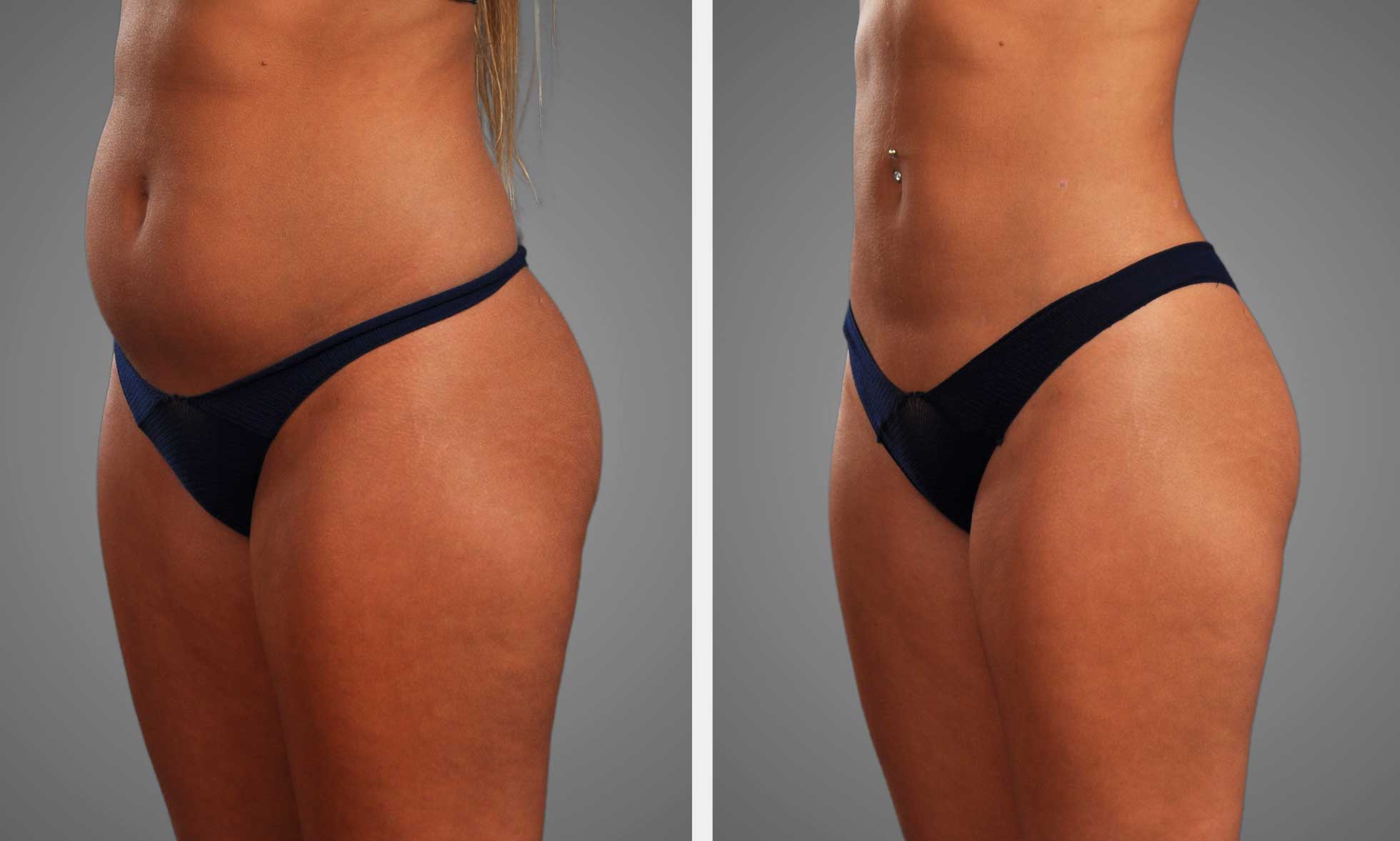
These before-and-afters help frame realistic expectations and illustrate how combined therapy transforms a refined midsection and cleaner muscle definition.
Candidacy Assessment
Evaluating candidacy for combined abdominal liposuction and skin tightening begins with a focused review of skin quality, fat volume, and overall health. A clear appraisal informs which techniques to use, whether staging is needed, and what outcome to expect. Below is a practical breakdown of the main factors clinicians and patients should consider, followed by a concise checklist.
Skin Quality
Best skin elasticity is key to attaining a flat, tightened tummy post-liposuction. For elasticity, pinch the skin and hold for a few seconds, then release. The quicker it recoils, the better naturally tightening it tends to be.
Mild skin laxity is usually aided by combining liposuction with an energy-based tightening or limited excision in order to minimize visible looseness. Age, genetics and history of pregnancies typically reduce elasticity. Sixty-year-old patients can still be excellent candidates if they have good skin and good health.
Collagen levels play a key role. Procedures that stimulate new collagen can improve firmness over months, so plan expectations around gradual improvement rather than instant change.
Fat Volume
Perfect candidates have localized fat deposits or trouble areas that don’t respond to diet and exercise. Patients close to their ideal weight—within 10 to 15 pounds—experience the most reliable outcome. Those within approximately 30 pounds, or within approximately 30 percent of ideal body weight, might still be candidates if weight was stable for six months.
High-volume fat extraction might necessitate staged procedures or other surgery, and surgeons typically recommend not removing more than 4.5 kilograms (10 pounds) in one session to avoid complications. Taking off a large amount of fat with no regard to skin laxity can leave you with loose skin and a bad contour.
Typical treatment areas for targeted fat reduction:
- Lower abdomen
- Flanks (love handles)
- Upper abdomen
- Suprapubic (below the navel)
- Lateral waist
Health Status
Good general health and a stable weight minimize the chance of complications and enhance recovery. Non-smokers heal more quickly and have less problematic wounds, so quitting smoking is usually necessary prior to an elective procedure.
Diabetes, poor circulation or immune disorders can slow healing and alter your candidacy, so be open about all medical history and medications. A ‘healthy lifestyle’—healthy eating, exercise, and weight stability for ‘x’ months—contributes to healing and improved long-term shape.
Know that more than 40 inches in men or 35 inches in women may be a sign of high visceral fat and should be addressed beyond the cosmetic procedure.
Checklist for candidacy assessment:
- Skin pinch test shows reasonable recoil
- Stable weight for ≥6 months
- Within 30 percent of your ideal body weight, ideally within 10 to 15 pounds.
- No uncontrolled chronic illness
- Non-smoker or committed to cessation
- Realistic expectations about limits on fat removal
Treatment Modalities
Abdominal liposuction eliminates the localized fat deposits, and skin tightening provides a solution if your skin is lax. When combined, you can enjoy a firmer, sleeker midsection. Modality selection influences outcomes, downtime, and what skin types can be treated. Match technique with anatomy, goals, and lifestyle to maximize results.
Non-Surgical
- Radiofrequency (RF) devices (e.g., Thermage, Venus)
- High-intensity focused ultrasound (HIFU) systems
- External laser treatments (low-level and fractional)
- Cryolipolysis adjuncts in some protocols
- Topical adjuncts and medical-grade skin care for maintenance
These treatments are optimal for mild looseness and moderate skin laxity and provide little downtime, sometimes only a few hours to a day of redness or swelling. They stimulate collagen and elastin over weeks to months, offering a subtle firming instead of immediate transformation.
As liposuction maintenance, non-surgical procedures maintain skin quality and can be repeated every few months. For younger patients under thirty or with good skin tone, non-surgical approaches are usually adequate without additional invasive tightening.
Minimally Invasive
Renuvion and BodyTite both utilized little access points and delivered energy to tighten the dermal and subdermal layers. Renuvion unites helium plasma and RF energy. BodyTite deploys controlled radiofrequency to internally heat tissue.
VASER utilizes ultrasound to emulsify fat and can be combined with energy tightening. These techniques provide more significant tightening than surface treatments while maintaining healing times shorter than open surgery.
They’re frequently performed simultaneously with liposuction to sculpt and tighten the skin, usually in some combined three to five hour operative session depending on area size. Benefits are better contour with minimal scarring and less risk of complications than full excision. Downsides are cost, anesthesia, and inconsistent results by skin quality.
Surgical
Abdominoplasty (tummy tuck) and formal skin excision eliminate excess tissue and frequently repair diastasis recti. Surgery reshapes the entire midsection and is appropriate for severe skin laxity, large redundant folds, or major muscle separation following weight loss or pregnancy.
These surgeries create the most significant and long-lasting transformations and can be complemented with liposuction options, including standard, HD, or 360 methods, to sculpt outlines. Laser-assisted liposuction like SmartLipo can be used pre-excisions to facilitate fat removal and provide additional collagen stimulation.
Recovery is longer, generally weeks to months, and scarring is permanent, albeit typically low on the abdomen. Surgical risks and downtime are higher, but so too are the potential gains in tone and form.
| Modality | Pros | Cons | Typical Recovery |
|---|---|---|---|
| Non-surgical | Low downtime, safe for mild laxity | Gradual, modest change | Hours–days |
| Minimally invasive | Stronger tightening, smaller scars | Requires anesthesia, cost | Days–2 weeks |
| Surgical | Dramatic, removes excess skin | Longer recovery, scars | Weeks–months |
Procedural Integration
Procedural integration means designing and executing abdominal liposuction along with skin tightening in a single, integrated manner to address both fat and loose skin in a single treatment session. This strategy seeks to provide a seamless abdominal silhouette by equating fat extraction with the skin’s tendency to contract or be surgically or energy-based device lifted.
Strategic Planning
Your tailored surgical strategy begins with evaluating your fat quantity, skin elasticity, and abdominal wall firmness. Young patients under 30 generally have great skin elasticity and don’t require additional tightening. Older patients or those who have had significant weight loss often demonstrate residual laxity and respond well to combined treatment.
Preoperative mapping marks suction zones, identifies loose skin, and documents muscle diastasis so the plan addresses the correct layers. Choice of technique matters: high-definition liposuction sculpts toward muscle detail, traditional liposuction removes volume broadly, and energy-assisted devices like VASER, BodyTite, or Renuvion can be chosen when improved skin contraction is desired.
For a patient desiring pencil lines of muscle, HD lipo and a tightening modality is frequently charted from the beginning. Experienced surgeons weigh trade-offs: when to include abdominoplasty, when liposuction alone suffices, often in men without excess skin, and when staged procedures are safer. Surgical planning establishes patient expectations in terms of scars, recovery, and probable contour changes.
Intraoperative Synergy
Doing liposuction and skin tightening in the same session allows the surgeon to sculpt shape as tissue reacts. Once fat is aspirated, the team is able to test for skin recoil and determine if energy-assisted tightening or formal skin resection is necessary. Intraoperative adjustments address surprises such as asymmetrical fat layers or weaker-than-expected skin stretch.
By combining, you minimize repeat anesthesia and can compress total treatment time compared to two separate operations. Using VASER to liberate fat prior to suction makes contour sculpting easier. Finishing with BodyTite or Renuvion provides an additional boost of skin tightening in areas with mild to moderate laxity.
When a tummy tuck is necessary, liposuction is frequently combined to sculpt flanks and smooth transitions as the surgeon removes redundant skin and tightens the underlying musculature. Integrated cases can have somewhat more extended local inflammation and a somewhat longer early recovery, but overall downtime is frequently comparable to a single more extensive procedure done alone.

Procedural integration immediate feedback on firmness and profile enhances final shaping and reduces the risk of return to the OR. Intraoperative synergy depends on a well-defined strategy, flexible selection of surgical techniques, and an expert team.
The Patient Perspective
Patients coming in for abdominal liposuction with skin tightening frequently have well-defined objectives but inconsistent anticipations. This section covers what patients need to understand about expected results, the psychological adaptations required, and the long-term behaviors that maintain results. Knowing these things makes individuals select the proper path and feel more assured during healing.
Realistic Expectations
They think that liposuction alone will fix massive loose skin, particularly after significant weight loss, only to be told they are poor candidates for liposuction alone. Dramatic contour changes can be achieved and targeted liposuction can uncover muscle striations for increased definition. A complete “six-pack” is infrequently desired and even less often attainable.
Some scarring and residual laxity can remain, with younger patients or those with good skin quality experiencing better natural recoil. Final contour and skin tightening develop over months. Swelling and tissue inflammation are the norm following the CPE. This can feel harsh but does not necessarily add to overall recovery time.
Skin can continue to firm for three to six months or more. When tightening is modest, patients can still at a later date elect nonsurgical treatments to enhance results. A board-certified plastic surgeon can tell you which plan, liposuction alone, immediate combination, or staged treatments, best suits your age, skin laxity, and goals.
The Mental Shift
Physical transformation usually sets off a change in self-perception. A lot of patients experience a boost in confidence and have an easier time selecting clothing or participating in social activities. The new silhouette can inspire individuals to maintain weight and implement consistent activity and conscious consumption.
It takes time to get used to a modified stomach. Even for those who shed the pounds, they may require additional emotional and pragmatic adjustment to once again feel at home in their bodies. Hearing patient stories helps someone seeking contour definition to fit clothing better and another wanting clearer muscle lines after years of effort.
Both describe renewed confidence. These real stories demonstrate how the method can facilitate life transformations without vouching for a magical or permanent personality repair.
Long-Term Commitment
Maintaining results is hard. Weight stability is key. Making gains unstable can lead to yo-yo dieting, which can reverse surgical gains and loosen skin all over again. Regular skin care, hydration, sun protection, and topical support keeps skin healthy, while routine check-ins with the surgeon keep tabs on progress.
Follow post-op instructions. Your healing habits influence scarring and final contour. Not all patients require skin tightening at the time of liposuction. The decision for combination therapy is a personal one, influenced by anatomy and achievable goals.
Risk and Recovery
Mixing abdominal liposuction with skin tightening reduces downtime and can reduce procedure costs. It modifies the risk and recovery profile. What follows is the summary of the key risks, anticipated healing trajectory, and proactive measures to safeguard outcomes and identify issues at the earliest juncture.
Combined Risks
Dual procedures may increase the risk of complications such as seroma, hematoma, or prolonged swelling, as tissue has been both disrupted and heated or tightened. By the time a trained surgeon applies thoughtful technique, the incremental risk is low.
Dual cases are just as safe as single procedures when both patient selection and technique are on point. Scarring can be visible, though the majority of scars will fade over months and the placement and your own healing ability play a role.
Altered skin sensation—numbness or tingling—can occur surrounding treated sites and usually resolves by three to six months. Early detection matters: watch for increasing redness, fever, leaking fluid, or wounds that do not close. Those can signify infection or bad wound healing and require immediate evaluation.
Recovery Timeline
Early recovery involves swelling, bruising, and tenderness. Some additional inflammation is to be expected following the hybrid approach, which usually subsides by the one month to six week mark.
Most patients are back to light activity in 2 to 4 weeks and some back to desk work within 7 to 14 days. Intense exercise and heavy lifting typically wait months. Full resolution of swelling and final contour can take 3 to 6 months as collagen remodels and skin firms.
Since one joint procedure replaces two, overall recovery time is typically cut by almost 50 percent and they often save 15 to 20 percent on expenses. Apply compression garments per instructions. They reduce swelling, support tissues, and aid in skin redraping.
Result Preservation
Long term shape relies on stable weight, consistent exercise, and a balanced diet. Significant weight gain or loss following surgery can undo contours and result in new skin laxity.
Skin-care steps, such as sun protection, moisturizers, and topical retinoids when appropriate, aid skin texture and collagen support. Certain patients enjoy maintenance with noninvasive skin-tightening devices. Roughly 90% require some tightening to combat innate laxity.
Maintain scheduled follow-ups with the surgical team to catch seromas, scar issues, or uneven healing early and to schedule any staged touch-ups if necessary.
Checklist — Side effects and warning signs to look out for during recovery
- Increased pain or discomfort
- Swelling or redness at the site of recovery
- Fever or chills
- Nausea or vomiting
- Changes in mood or behavior
- Difficulty breathing or shortness of breath
- Unusual fatigue or weakness
- Signs of infection, such as pus or increased warmth
- Normal: swelling, bruising, mild numbness, tightness in abdomen.
- Expect: increased inflammation for 4–6 weeks, gradual firmness improvement.
- Warning signs: Fever, spreading redness, persistent drainage, sudden increase in pain, growing swelling or hard lumps.
- Action: call your surgeon immediately for any warning signs.
Conclusion
Abdominal liposuction combined with skin tightening provides you a definite route toward improved contour and more taut skin. This combination cuts fat and firms loose tissue in one plan. Good candidates have stable weight, good skin tone, and clear goals. Surgeons select the most appropriate method — energy devices, sutures, or focused excision — based on body type and degree of laxity. Recovery differs by technique but remains within a couple of weeks for the majority. There are dangers, but thoughtful preparation and aftercare reduce them.
Try a consult with a board-certified surgeon to chart a step-by-step plan. Request before and after pictures and a definitive timeline. Schedule a consultation for a personalized plan and realistic results.
Frequently Asked Questions
What are the benefits of combining abdominal liposuction with skin tightening?
Both together provide better contour and less loose skin than liposuction alone. It imparts smoother results, less staged procedures, and shorter overall recovery than doing each treatment separately.
Who is a good candidate for the combined procedure?
Good candidates are adults close to their ideal weight with localized fat and mild to moderate skin laxity. Healthy non-smokers with reasonable expectations fare best.
Which skin-tightening technologies pair well with liposuction?
Popular options include radiofrequency (RF), laser-assisted, and ultrasound-based tightening. These techniques stimulate collagen and pair well with or after liposuction for enhanced skin contraction.
Is it safer to do both procedures at once?
When done by a seasoned board-certified surgeon, such duos can be safe. Risks rise with operative time and patient comorbidities, so prudent preoperative evaluation is critical.
What should I expect during recovery?
Brusing, swelling, and compression garment use for a few weeks is to be expected. The majority of patients feel able to resume light activity between one to two weeks and full activity between four to six weeks, depending on how extensive the treatment was.
How long do results last?
Lasting results with stable weight and a healthy life. Skin tightening effects keep getting better for up to 12 months as collagen remodels. Major weight gain will decrease longevity.
How do I choose the right surgeon or clinic?
Select a board-certified plastic surgeon or skilled cosmetic specialist that provides before-and-after photos, patient testimonials, and transparent complication policies. Inquire about technique, devices employed, and care after the operation.