


Key Takeaways
-
Cankle contouring with liposuction is a minimally invasive procedure that eliminates fat from the lower leg to enhance the transition between calf and ankle. It is only effective when fat, not bone or muscle shape, is the underlying contributor.
-
Candidates are evaluated for skin elasticity, overall health, realistic expectations, and medical history guides the surgical plan to reduce risks and optimize results.
-
Advanced techniques including tumescent, ultrasound-assisted, and laser-assisted liposuction emphasize accuracy and sparing of tissue. These methods potentially reduce downtime and decrease the risk of complications.
-
Recovery entails typical swelling and bruising phases, compression garments, and gradual return to activity. The majority of swelling resolves in a few weeks.
-
Frequent risks are infection, bruising, prolonged swelling or numbness, and nerve injury. Rare but severe risks include blood clots and anesthesia reactions. Thoughtful patient selection and following post-op instructions minimize these risks.
-
To optimize your results, pick a skilled surgeon, adhere to the pre- and post-op instructions, maintain a stable weight, and be patient. It takes time to heal and see final results.
Cankle contouring with liposuction is a surgical procedure to eliminate the excess fat around the lower calf and ankle. The operation focuses on the region where the calf joins the ankle to sculpt a more pronounced lower leg silhouette. Candidates generally have localized areas of fat and good skin tone. Recovery typically includes brief downtime, compression garments, and a progressive resumption of activity. It covers technique, risks, recovery, and realistic results.
Anatomy Basics
Lower leg, which contains the calf and ankle areas with their layers of skin, subcutaneous fat, muscle, tendons and bone arranged specifically for standing and moving. Your calf is ruled by the gastrocnemius and soleus muscles that taper down toward your Achilles tendon. In the ankle, we find the distal tibia and fibula, the medial and lateral malleoli, and a thinner soft-tissue envelope. Superficial fat pads lay on top of the ankle bones and surrounding distal calf, cushioning skin over tendon and bone. Tiny blood vessels and lymphatics crisscross these layers, and their action influences appearance throughout the day.
Fat distribution in the lower leg can cause a “cankle” look when subcutaneous fat pads are relatively thick around the ankle, blurring the transition from calf to foot. Fat here feels soft and pinchable and generally stays fairly consistent through the day, unlike true fluid swelling. The pinch test helps assess this. If the fat thickness measures about 1 to 1.5 centimeters at the ankle, a patient may be considered for contouring. Examples include someone with a 1.2 cm pinch at the medial ankle and good skin tone who may be a reasonable candidate. Someone with only a 0.5 cm pinch would likely see minimal change from liposuction.
Muscle, bone and fat all mold the ankle. Bone delineates the bony landmarks, the malleoli and distal tibia, that establish the basic silhouette. Muscle adds bulk further up the calf and tendons constrict the space around the ankle. Fat occupies the space between skin and the deeper tissues and is the most alterable element. In bony terms or where tendons are prominent, liposuction offers little transformation. When fat is the primary culprit, minimal-volume, precision fat removal can sculpt a more tapered appearance.
Genetics and lifestyle both play a role in who gets cankles. Genetics dictate baseline fat patterning, skin thickness and elasticity. Certain families demonstrate heavy lower-leg fat independent of weight. Lifestyle factors, such as standing for long periods of time, traveling, heat, and inactivity, all increase fluid pooling and can cause ankles to appear puffier by evening. The ankle tends to be especially edematous due to gravity, which drags fluid downward and delays its resorption. Edema presents as tight, shiny skin, a heavy feeling, and pitting on pressure, all of which point to a medical workup rather than liposuction.
Skin elasticity and the artistry of your surgeon come into play. Good to moderate skin elasticity forebodes superior redraping following fat removal. The ankle’s intricate anatomy dictates a preference for cautious fat removal. Little, nice smooth reductions generally appear more attractive than harsh scissors. Using microcannulas (3 mm or smaller), minimal access points, and a criss-cross liposuction technique diminishes surface irregularities and enhances contour results.
The Procedure
Cankle contouring with liposuction is a minimally invasive procedure that extracts excess fat deposits surrounding the ankle through tiny incisions using a thin cannula, aiming to sculpt the transition from calf to ankle. Today’s techniques are minimally invasive, work to preserve nerves and blood vessels, and frequently have patients back to normal activity in days. Below is an explicit, stepwise outline of the common flow, followed by specifics on evaluation, tools, methods, and constraints.
-
Preoperative planning and assessment include a review of medical history, a physical exam, skin elasticity checks, and photographic documentation to set realistic goals and confirm candidacy.
-
Marking and anesthesia: The surgeon marks targeted fat pockets. Local, local with sedation, or general anesthesia is used depending on the amount of work and the patient’s overall health.
-
Tumescent infiltration: Saline with local anesthetic and epinephrine is injected to reduce bleeding and make fat easier to remove.
-
Incisions and cannula entry: Several incisions of less than 1.3 cm (less than half an inch) are placed around the ankle in discreet spots. A thin cannula gently breaks up and suctions out fat.
-
Sculpting and symmetry checks: Fat is removed in measured amounts while the surgeon sculpts a natural taper from calf to ankle, checking symmetry and proportion throughout.
-
Closure and dressing: Incisions closed with fine sutures or adhesive strips. Compression dressings on the swelling.
-
Recovery and follow-up: Patients wear compression garments for several weeks, keep ankles elevated during the first week, and return for staged checks to monitor healing.
1. Assessment
Initial evaluation to see if liposuction is the right fit. The surgeon measures the ankle circumference, tests skin elasticity and checks whether it is fat, muscle or bone causing it. We review health issues like heart conditions, clotting disorders and medications. Realistic expectations are stressed. If ankle fullness is due to bone conformation or hypertrophied calves, liposuction won’t produce the change you seek. Medical history directs anesthesia selection and surgical planning.
2. Technology
Popular methodologies are tumescent liposuction, ultrasound-assisted liposuction (UAL), and laser-assisted liposuction (LAL). Tumescent provides blood loss control and is easy. UAL can loosen dense fat and assist precision. LAL may tighten skin by means of controlled thermal energy. High-tech instruments concentrate energy to disrupt fat and protect nerves and vessels, minimizing injury. Technology selection determines postoperative swelling, rate of fat extraction, and fineness of final contouring.
3. Technique
We make small incisions in hidden creases or behind the ankle. The narrow cannula liquefies and suctions fat in controlled passes so there’s no risk of overcorrection. Sculpt surgeons slowly switch sides to maintain symmetry and a natural calf-to-ankle slope. We reduce scarring through tiny incisions, meticulous closure, and post-op scar care. Preservation of nerve and vessel is at the forefront.
4. Limitations
Liposuction cannot alter bone structure or decrease muscle mass. Results depend on skin quality and body anatomy. Loose skin might not tighten all the way. Advanced swelling or specific medical issues may restrict eligibility. Because uneven fat removal can cause contour irregularities, it is often safer to remove fat conservatively and in stages.
Key Benefits
Ankle liposuction provides precise lower leg contouring to define the separation between calf and ankle. Excess fat around the ankle is eliminated, creating a more uniform lower leg contour that balances the entire leg with the thigh and knee. The enhanced definition is particularly evident when fat, rather than fluid or bone structure, is responsible for the plumpness. Microcannulas three millimeters or less are frequently employed to minimize the risk of surface imperfections and to enable more precise shaping of the calf to ankle transition.
The enhanced visual definition frequently shifts how clothes and shoes fit. For numerous patients, a trimmer ankle complements the appearance of boots, skirts, pants, and tight socks. This has practical benefits: footwear sits more naturally, heels and narrow shoes feel less tight, and pant hems hang with fewer pulls. More than fit, the transformation can be significant for self-esteem. Ankle line definition means you don’t have to be self-conscious in social and professional situations, and most of our patients say they feel more confident in open footwear and swimwear.
Ankle liposuction results are usually long lasting with stable weight and good skin tone to allow sagging skin retraction. Fat cells extracted by liposuction never return to the treated site, so a consistent weight is essential for keeping shape. Good skin elasticity allows the skin to retract smoothly. Patients with poor elasticity can require further procedures. Visible enhancement typically appears within a few weeks as swelling decreases. The final contour becomes more apparent over several months as tissues settle and respond to healing.
The recovery is relatively quick compared with more invasive leg surgeries. Most patients can return to desk work in 3 to 7 days. However, higher activity and exercise should be postponed longer as advised by your surgeon. There may be some minor bruising and swelling early on, and compression garments are usually worn for a few weeks to control the swelling and help the skin adhere to the new shape. Following microcannula techniques and precision approaches minimizes trauma and accelerates recovery.
Risks and realism may be paramount. Even with experienced surgeons, there is about a five percent chance of complications, such as infection, contour irregularity, asymmetry, extended swelling, or sensation changes. Candidacy is contingent upon the cause of the cankle. Fat responds most favorably, so evaluation and consultation with an experienced surgeon delineates expected results, alternative treatments, and post-operative care for maximum, long-lasting results.
Potential Risks
Cankle contouring via liposuction has a series of expected and less frequent risks. Knowing this allows patients to balance the advantages and decide if they want to proceed. The risks come from the procedure, patient factors like skin quality, and postoperative care. The final shape might not be evident for months, as swelling and tissue changes require time to subside.
Common and expected complications
-
Infection
-
Bruising and hematoma
-
Prolonged swelling (edema)
-
Numbness or altered sensation (nerve injury)
-
Seroma (fluid collection)
-
Contour irregularity or waviness
-
Asymmetry between legs
-
Over-correction (too much fat removed)
Infection, while uncommon, can occur and may need antibiotics or drainage. Bruising and hematoma are common early effects and usually resolve in weeks, though larger collections might need a procedure to evacuate them. Edema around the ankles and calves can last up to six months or longer, and swelling that persists makes it hard to judge final results. Sensory changes from nerve irritation or damage often improve but can be long-lasting. Seromas may need aspiration. Asymmetry and contour irregularity are frequent patient concerns. The literature identifies contour deformity as the most common adverse outcome after liposuction.
Patient factors and technical limits
Patients with poor skin elasticity or existing cellulite are at increased risk of noticeable dimpling following fat extraction. Skin that’s thin or loose might not snap back into place, creating ripply unevenness. Correcting just the ankle in isolation may introduce a harsh, unnatural boundary between treated and untreated regions, focusing attention on imbalances rather than remedying them. Contours should frequently extend to encompass neighboring calf or lower-leg regions. The use of small microcannulas, three millimeters or less, in close proximity to the skin surface minimizes the risk of surface irregularities and should be incorporated into the surgical approach.
Rare but serious risks and outcomes
In rare cases, there are some serious occurrences such as blood clots, deep vein thrombosis, or anesthesia allergies. These need immediate medical attention and occasionally hospitalization. Complication rates are around 5% for ankle liposuction when conducted by skilled surgeons, according to research, and a systematic review in Aesthetic Plastic Surgery backs up that overall complication rates for liposuction are low. Even low-rate complications can be devastating cosmetically or functionally when they involve such a visible and weight-bearing area as the ankle.
Recovery and expectations
The ultimate contour results might not be evident until the swelling subsides, at least six months or more. Patients should anticipate follow-up visits, potential contour defect revision procedures, and an honest conversation regarding skin laxity limitations.
Healing Process
Recovery from cankle contouring liposuction occurs in stages. There’s initial post-op recovery with numbness and fluid accumulation, then a phase of active swelling and bruising, then gradual softening and skin retraction, and long-term maturation of the contour as residual swelling settles. Count on tumescent anesthesia to numb and deliver hours of pain relief post-procedure. A 2024 study discovered low postoperative pain scores during recovery overall.
Timeline
-
Week 0–1: Rest at home. Swelling and bruising peak. Wear compression garment continuously. Gentle walking reduces clot risk.
-
Week 2–3: Early shape changes are visible, bruising fades, light daily activities resume, and continue garment use.
-
Week 4–6: Most patients return to routine non-strenuous work. Reduced swelling may occur, though ankle fullness may persist.
-
Month 3: Noticeable refinement as skin conforms. Moderate activity can be increased with caution.
-
Month 6+: Swelling often largely resolves. The final contour becomes apparent, though small changes may continue up to 12 months.
While the majority of swelling ceases after a few weeks, it can linger around the ankles and calves for up to 6 months. Follow-up appointments are normally scheduled at 1 week, 4 to 6 weeks, and 3 to 6 months, with further sessions for each person’s specific advancement. I found it helpful to use a simple table to monitor dates, pain level, swelling estimate, garment hours, and any concerns to demonstrate symptom resolution over time.
Garments
Compression garments decrease swelling and aid the skin in conforming to new contours. Generally wear a graduated compression wrap or stocking uninterrupted for the first 1 to 2 weeks, then at least 8 to 12 hours per day for several additional weeks. Some surgeons advise continuing nightly use for up to 3 months. Right usage feels better and may even improve final results by holding tissues in place as scar tissue takes hold.
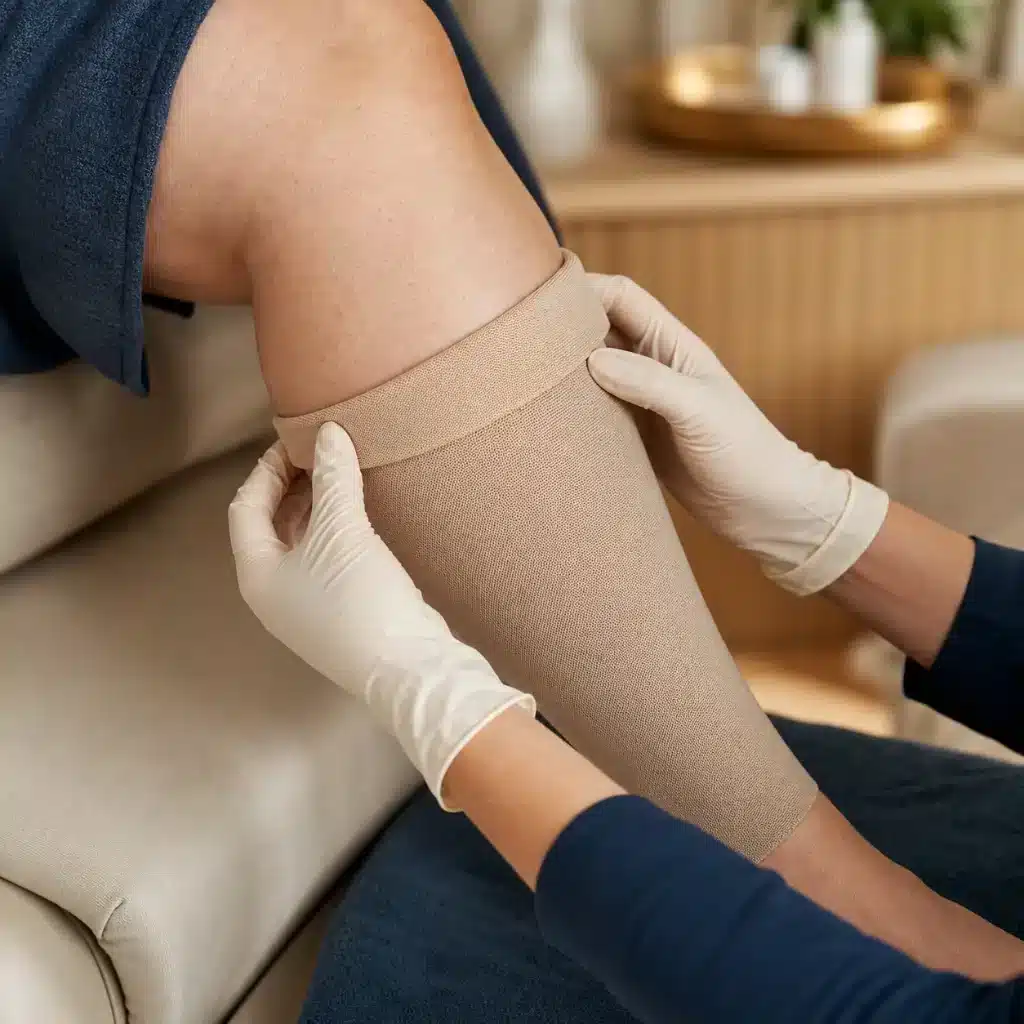
Symptoms of bad fit are numbness that doesn’t go away, increased pain, new or worsening bruising or pressure sores. Reposition dressings or change clothes if creases, pinching, or too much tautness forms. Elevating the legs above heart level when resting goes hand in hand with garment use and accelerates fluid clearance.
Activity
-
First 48 to 72 hours: Limit movement and take short indoor walks to lower clot risk.
-
Week 1–2: Gentle walking for 10 to 20 minutes several times daily. Avoid long standing.
-
Week 3–6: Resume low-impact cardio like cycling or swimming with surgeon approval.
-
After 6 to 8 weeks, slowly reintroduce higher-impact exercise and avoid heavy ankle loading until cleared.
Build up activity gradually guided by pain, swelling, and wound healing signs. If you have any warning signs, push things back, such as increasing redness, stabbing pain, fever, or new swelling.
Clinical Perspectives
Cankle contouring with lipo is a highly focused treatment designed to minimize fat poppin’ around the ankle and improve the shapely flow from calf to foot. Prior to any treatment, careful consultation has to exclude edema and lipedema, as swelling from those will not respond to liposuction and can be aggravated by surgery. If patients’ swelling worsens throughout the day, improves with elevation of the legs, or leaves an indent that persists for a time when pressed upon, they’re more likely to have edema and require medical management or workup rather than liposuction.
Contemporary clinical opinion considers cankle liposuction to be successful in some patients with real localized fat. When fat is the culprit, the treatment can enhance definition around the ankle bones, help sculpt a more elegant curve next to the Achilles and eliminate the ‘straight line’ appearance from calf to foot. Experts caution that realistic expectations are essential. Final results may not be fully apparent until swelling resolves, which commonly takes six months or longer. Surgeons emphasize meticulous technique as the ankle has thin skin and scant soft tissue, which leaves contour irregularities at risk.
Patient satisfaction and complication data demonstrate generally positive results. Liposuction has low rates of overall complications, with contour deformity being the most commonly reported adverse outcome. A 2024 study observed low pain scores in recovery and noted most patients resume light activity within the initial few weeks. Ankle and calf swelling can last as long as six months post-op, and this prolonged edema can blur the final contour and impact satisfaction during those early months. Real patient feedback tends to focus on incremental progression and tremendous satisfaction when realistic expectations are set and technique is good.
Technique and technology keep evolving. Small microcannulas of 3 mm or less should be used in areas that are near the skin surface as this will limit the risk of any lumps or bumps on the surface. Surgeons are more likely to use tumescent anesthesia, thoughtful liposuction design, and cautious fat removal to maintain vascularity and skin structure. Adjuncts like ultrasound-assisted or power-assisted liposuction can assist with fibrous tissue, but data does not demonstrate a clear advantage for routine ankle work. Selection is based on surgeon preference and patient anatomy.
Additional research and standardization of outcome measures in terms of contour symmetry, regional fat reoccurrence, and improved postoperative swelling protocols. Clinical perspectives We need studies comparing microcannula techniques, compression regimens, and physical therapies for edema to help refine care.
Conclusion
Cankle contouring with liposuction can provide a vivid transformation to the lower leg silhouette. This contours the area with liposuction, trimming the excess fat around the ankle and lower calf. Most patients notice a rounder, leaner ankle and a smoother calf line. Surgeons find consistent outcomes when they apply a judicious technique and defined objectives. The recovery spans weeks, with swelling that gradually subsides. Risks include irregularity, areas of numbness, and delayed wound healing. Ideal candidates have maintained a stable weight and possess reasonable expectations. Chat with a board-certified surgeon to review scans, browse before-and-after photos, and customize a road map that suits your body and lifestyle. Book a consult to receive personalized recommendations and next steps.
Frequently Asked Questions
What is cankle contouring with liposuction?
Cankle contouring with liposuction removes stubborn fat deposits around the lower calf and ankle to give you a slimmer cankle contour. It addresses fatty deposits, not bone structure, and is performed under local or general anesthesia by a board-certified surgeon.
Who is a good candidate for this procedure?
Ideal candidates are healthy adults with localized fat deposits around the lower leg who have stable weight and realistic expectations. Candidates must be in good health, nonsmokers, and without any circulation or healing disorders.
What results can I expect and how long do they last?
Look forward to a sleeker ankle-calf silhouette after swelling subsides. Results are permanent if you maintain your weight and a healthy lifestyle. Fat can return with weight gain.
What are the main risks and complications?
These are risks of bruising, infection, contour irregularities, numbness, fluid build-up, and poor scarring. Serious complications are uncommon, but they can occur, so it’s best to select a surgeon with a proven history of success.
How long is recovery and when can I return to activities?
It requires one to two weeks of downtime for routine activities. Swelling and firmness may linger for a few months. Light exercise can typically be resumed after two to four weeks, with complete healing by three to six months, according to your surgeon’s recommendation.
Will liposuction affect calf muscle or circulation?
If done properly, liposuction is very specific to fat and spares muscle and large vessels. Surgeons check circulation before the operation. If you have bad blood flow, you’re probably not a candidate.
How should I choose a surgeon for cankle contouring?
Select a board-certified plastic surgeon with lower leg liposuction expertise. Check before and afters, patient reviews, and inquire about complication rates and postop care. A transparent consultation establishes trust and creates reasonable expectations.
