



If you've been told it's just your weight
Legs that never changed no matter how disciplined you were are not a willpower problem. They are the signature of a specific medical condition — one most physicians were never trained to recognize. Dr. William Hall has treated lipedema in Scottsdale for more than 15 years.
Somewhere along the way — often as early as your teens — your legs started changing on their own schedule. Your face slimmed down, your waist came in, but your legs ignored every diet and every trainer. That pattern has a name, and it has been in the medical literature for more than eighty years.
"Ordinary fat doesn't hurt when you press on it. It doesn't bruise for no reason. It doesn't stop at the ankles. And it doesn't ignore a disciplined diet while the rest of the body responds."
The condition
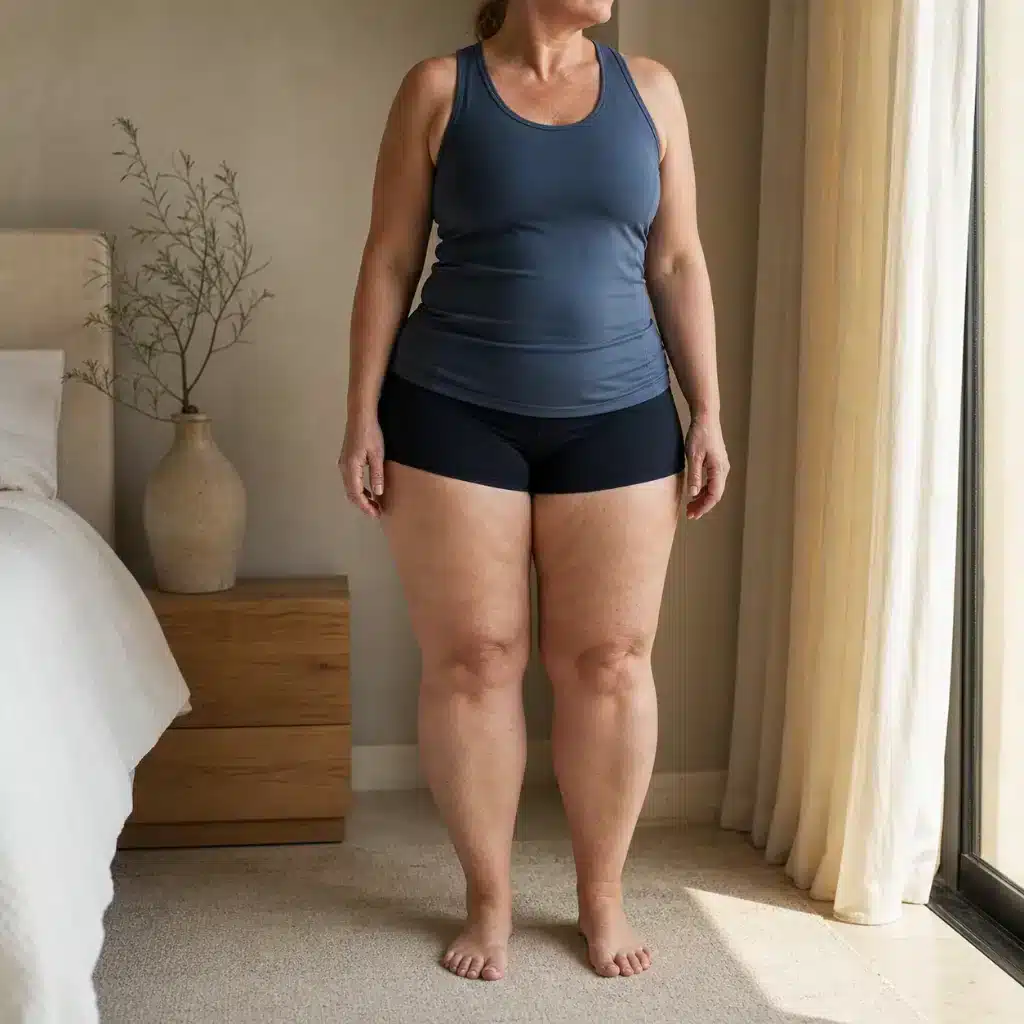
Lipedema (pronounced lih-pa-DEE-muh) is a chronic disorder of the fat tissue itself. Across most of the body, fat is simply storage the body fills and empties. In lipedema, the fat of the legs — and in many women the arms — behaves like a different tissue. It grows out of proportion to the rest of the body, distributes itself symmetrically, stops at the ankles, and leaves the feet and hands untouched.
The tissue is physically different: mildly inflamed and filled with small, firm nodules. That is why it can be tender when normal fat is painless, and why it bruises from contact that healthy tissue would barely notice. It is also resistant to diet and exercise — not "stubborn but beatable," but resistant by its biology. Recognizing the signs early makes an enormous difference in how simple treatment will be.
Lipedema is not a new theory or a fringe diagnosis. It is a common disease that is rarely recognized — and those are two very different things.
Patient story
See how Carol found real relief with Gentle Sculpt™ lipedema treatment at Infini — in her own words.

The blind spot
If lipedema has been documented since 1940 and affects as many as one woman in ten, how did it stay invisible for so long? Not through one big failure, but through a chain of four small, ordinary ones — and none of them runs through you.
Diagnosis is pattern recognition, and this pattern was barely mentioned in medical school. A pattern that was never filed in the library can't be matched later.
There is no lab test for lipedema. A scale can't tell lipedema tissue from ordinary fat — so every standard number said "weight," and "weight" went into the chart.
It lives in fat, borders the lymphatic system, responds to hormones, and gets mistaken for vein problems. Every office could honestly say "that's not ours" and refer you on.
Rarely diagnosed → rarely recorded → looks rare → little research → absent from training → rarely diagnosed. A common disease carrying a rare disease's reputation.
Every link in that chain is weaker today than it has ever been. Lipedema is now being studied on several continents, and more women walk into appointments already carrying the word their doctors were never handed.
A map, not a verdict
Physicians describe lipedema in four stages. Two things first, because the word makes many women brace: a stage is a location, not a grade — it was never measuring your effort. And a stage is not a sentence: there is no stage at which a physician who understands this disease would say nothing can be done.
Skin looks normal — often entirely so. Underneath: small firm nodules, easy bruising, mild tenderness. The stage most often missed, even in slim women.
The surface becomes uneven and dimpled. Nodules are larger and the disproportion harder to dress around; diet reshapes everything above the waist and almost nothing below it.
Deposits can extend to the ankles and become heavy enough to fold at the knees or thighs. Skin thickens. The weight itself starts to change how you walk and how quickly you tire.
Accumulated tissue obstructs the lymphatic system and lymphedema develops on top of the lipedema. The most advanced stage — and still not the end of the road.
"Earlier is simpler. Later is still workable. Nowhere is hopeless."
The biology
Not all fat in the body is the same substance doing the same job. Most of your fat is a fuel reserve — when you eat less and move more, that fat answers. Lipedema tissue isn't in that account. It accumulates on its own biological timetable, which is why it appears or worsens at the hormonal turning points of a woman's life: puberty, pregnancy, menopause.
The same applies to the newest medications — GLP-1 drugs such as semaglutide and tirzepatide. They are real advances that quiet hunger and reduce overall body weight, and under a physician's care they can help with ordinary weight (learn more about medical weight loss at Infini). But nothing about how they work suggests they reach lipedema tissue. Don't let anyone tell you they are the answer to your legs.
Genetics and hormones are the major factors — lipedema runs in families, and the tendency can be inherited from either parent.
Telling them apart
Lipedema lives in the shadow of two other conditions and is routinely mistaken for both. They are evaluated and treated differently, so telling them apart matters.
Swipe the table sideways to see all four columns
| Feature | Lipedema | Lymphedema | Obesity |
|---|---|---|---|
| What it is | Disorder of the fat tissue itself | Fluid backup in the lymphatic drainage system | Systemic excess of ordinary fat |
| Pattern | Symmetrical; legs & arms; spares feet and hands | Often one-sided; includes the foot | Whole body |
| Who | Almost exclusively women | Men and women | Men and women |
| Pain & bruising | Tender to pressure; bruises easily | May or may not hurt | Painless |
| Diet & exercise | Affected tissue does not respond | Not a fat problem | Responds over time |
| Onset | Puberty, pregnancy, menopause | After injury, surgery, or genetic | Gradual |
The way forward
The lymphatic network in these limbs has been working above its comfortable capacity for years. That single fact is why the right treatment and the wrong treatment look nothing alike: anything done to these legs must be done in a way that protects the lymphatic system.
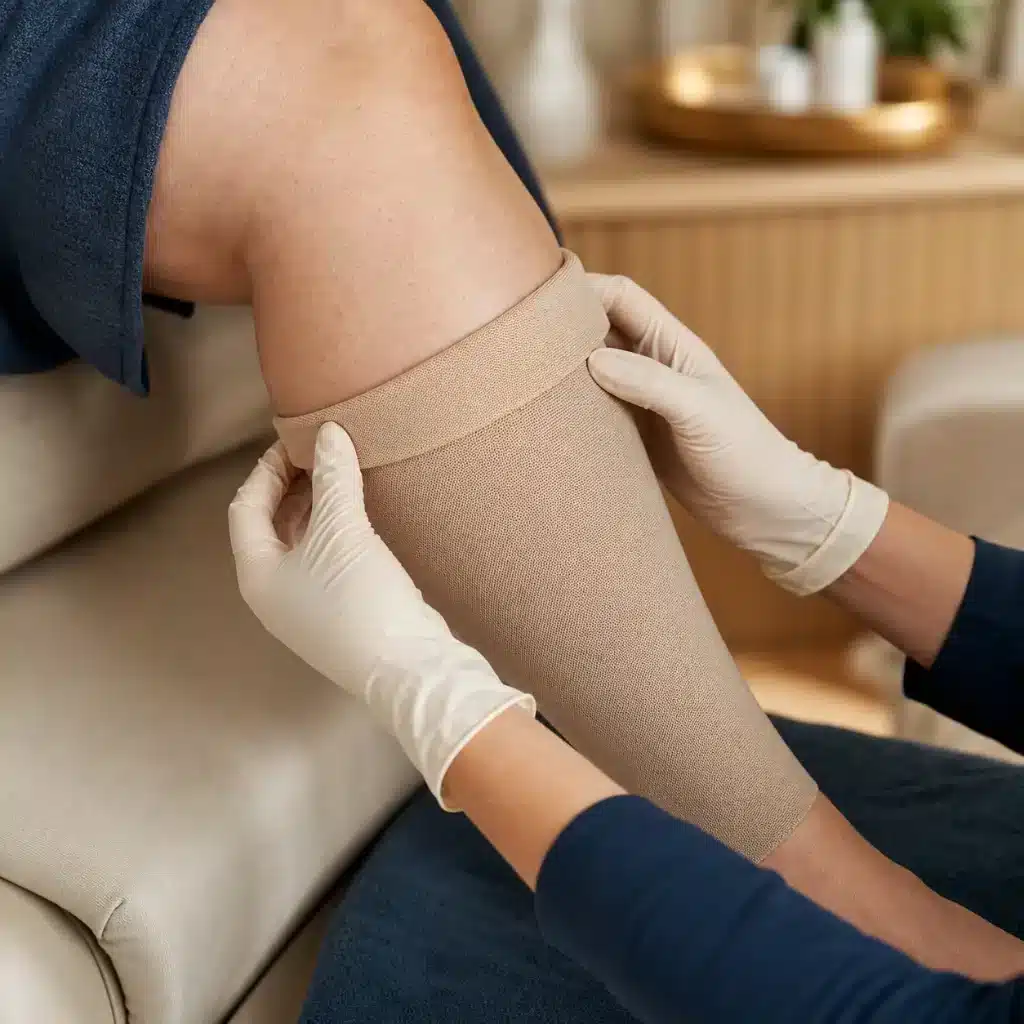
Compression garments reduce swelling and ease pain. Low-impact movement — walking, swimming — helps move fluid and supports drainage. These measures support the body at every stage, and the years you spent staying active were never wasted.
Specialized liposuction removes the diseased tissue that diet and exercise cannot reach. Our Gentle Sculpt™ technique is performed awake, under local anesthesia, working with the fragile drainage system rather than against it. It is close to the opposite of the aggressive surgery that gave the whole idea a bad name.

Financing available — see our financing options.
The question you've been carrying
No. It is not too late. Lipedema is progressive — it tends to advance slowly, in fits and starts, around the hormonal turning points of a woman's life. But progressive does not mean fast, and it does not mean steady. Many women stay in the same stage for years or decades.
One of our patients had lived with this disease for more than twenty years and could barely walk into the room. We were able to operate, and once she had healed she told us her pain had dropped by more than seventy percent. That was her result, in her words — pain relief is something we work toward, not something any honest physician promises in advance. But her case is why we do not accept "too late" as a diagnosis.
Earlier is simpler — that's a statement about degrees of difficulty. It is not the same sentence as "later is too late." The only door that was ever closed was the one marked information, and it's open now.
Straight answers
Lipedema is a chronic, frequently painful disorder of the fat tissue. Fat builds up symmetrically in the legs and sometimes the arms while the feet and hands stay unaffected. It occurs almost only in women and is often misdiagnosed as obesity or lymphedema.
Research is ongoing, but two factors appear in most cases: genetics (it runs in families and can be inherited from either parent) and hormones, with onset or progression around puberty, pregnancy, or menopause.
Typical signs include symmetrical fullness of the legs or arms that spares the feet and hands, tissue that hurts when pressed, bruising without a clear cause, a family history, and weight that comes off everywhere except the affected limbs. Only an examination by a physician experienced with lipedema can confirm the diagnosis — that is exactly what your free consultation with Dr. Hall is for.
No. Obesity is systemic, affects men and women, and responds to sustained changes in diet and activity. Lipedema is regional and symmetrical, affects women almost exclusively, and the affected tissue does not respond to those tools. Both can be present in the same person, which is one reason lipedema is so often missed.
Lipedema is progressive, but it usually advances slowly and in steps, often around hormonal changes, with long stable periods in between. Earlier treatment is simpler, yet no stage is beyond help.
Conservative care — compression garments, low-impact movement, manual lymphatic drainage — helps at every stage. Lymphatic-sparing surgical treatment, such as our awake Gentle Sculpt™ technique, removes the diseased tissue that diet and exercise cannot reach. There is no cure yet, but treatment targets what matters: pain, heaviness, swelling, and mobility.
Yes. With an accurate diagnosis, appropriate management, and support, women with lipedema can feel well and enjoy their lives again. Getting the correct name for the condition is the first step — everything on this page exists because that step matters.
Free virtual consultations available
A named disease changes what you can do next — practically, not just emotionally. Find out where you stand with Dr. William Hall, Dr. William Shuell, and the Infini team in Scottsdale.

