Directions
 Call Us
 Email Us


Key Takeaways
- Fibrous fat is a dense, collagen-rich type of fat that’s typically located in the male abdomen, chest, and flanks and it refuses to budge with diet, exercise, and traditional liposuction techniques. Reserve advanced techniques when dense tissue exists.
- Power-assisted liposuction and ultrasound-assisted liposuction tend to be better for fibrous fat in men. Traditional lipo has trouble, and laser lipo fits tiny, isolated spots where you want some skin tightening.
- Pre-surgical assessment must document fat type, skin quality, medical history, and realistic goals to guide technique selection and reduce risks of contour irregularities.
- Think longer surgeries, more swelling or bruising, and results that unravel over weeks to months. Compress with garments and follow post op instructions.
- Sustain results through maintaining a stable weight, eating well, and exercising regularly. Supplement with adjunctive therapies such as radiofrequency tightening or a lymphatic massage to polish results.
- Find a skilled surgeon who customizes the plan to your anatomy, maps target areas for etching if you want, and sets clear expectations and recovery directions.
Fibrous fat in the male abdomen is dense connective tissue around fat that soft liposuction usually can’t touch. It develops from scar-like bands that tether fat to muscle and skin, resulting in a lumpy, firm appearance.
Lipo techniques for fibrous fat employ power-assisted tools, ultrasound, or specific cannulas to disrupt bands and extract tissue with less distortion. The core of the book breaks down for you each technique, risks, recovery, and anticipated results in straightforward, actionable language.
Understanding Fibrous Fat
Fibrous fat is dense, connective tissue-rich adipose tissue, often located in the male abdomen, chest, and flanks. It can adhere closely to the dermis and is known as mantle fat or a blanket of palisading vertical-columnar fat pearls. This location and composition provide it a tethered, firm quality that influences its behavior with weight fluctuation and surgery.
Its Origin
Fibrous fat is hormone-induced, with testosterone molding male fat storage into more fibrous, firm deposits. Genetic predilections come into play as well. Some guys are just predisposed to connective-rich fat. Age adds to this mix. The tissue can become more fibrotic over time.
Common areas for fibrous fat accumulation in men include the upper and lower abdomen, flanks (love handles), chest (pseudo-gynecomastia presentations), and lower back and periumbilical regions.
Lifestyle just exacerbates these deposits. Repeated weight gain and loss stretch and scar subcutaneous layers. Sedentary habits cause these muscles to lack tone beneath the fascia, so fibrous fat can look more obvious and be more difficult to move through diet or exercise.
Its Structure
Fibrous fat consists of densely packed fat cells interwoven into collagen-rich connective tissue. This matrix connects to the dermis and can even be contiguous with Scarpa’s fascia layers and is less mobile than softer fat.
This makes the texture solid and rubbery rather than malleable. This anatomical difference makes it difficult for traditional suction methods to eradicate it effectively, as the thick strands repel cannula movement.
The tissue is often more vascular and nerve-laden, increasing the potential for bruising, bleeding, and pain postoperatively when addressed. Sub-Scarpa’s fat, which exists under Scarpa’s fascia and is separated from Camper’s fascia by that very same layer, transforms the way surgeons think about dissection and hemostasis.
Its Challenge
Due to its density and attachments, fibrous fat necessitates specialized liposuction techniques. Methods like 16-gauge and 14-gauge microcannula tunneling and fenestration through three to five 1.5-millimeter microincisions in the upper abdomen that disrupt the fibrous matrix are frequently utilized.
If the same procedure is used for everyone, patients might be left with contour irregularities, residual pockets, or excess tissue trauma. Operative time may be greater and swelling or bruising may be more pronounced.
Posttraumatic pseudolipomas can develop when Scarpa’s fascia is ripped and deeper fat herniates or when transverse transections through Scarpa’s fascia are unsutured, resulting in deforming traction and fat bulging.
Skilled surgeons match technique to tissue. Selective fenestration, careful cannula selection, and attention to Scarpa’s layer preserve elasticity and reduce rugosity after lower abdominal work.
Liposuction Techniques
Fibrous fat liposuction in the male abdomen demands a technique capable of treating dense tissue, maintaining contour and minimizing trauma. The following subsections outline each standard technique, discuss their efficacy on fibrous deposits, highlight practical concerns such as the tumescent method and operating time, and provide a summary table with their advantages and disadvantages.
1. Traditional Lipo
Conventional liposuction, or suction-assisted liposuction (SAL), employs a thin metal tube (cannula) moved manually through small incisions to disrupt and suck out fat. This manual approach fares best on softer, less fibrous fat and smaller areas where brute force isn’t ideal.
It can have trouble with dense, fibrous fat as mechanical disruption is minimal. The surgeon has to use more force, which increases the risk of tissue trauma, bleeding, and contour irregularities. SAL is commonly performed alongside the tumescent technique, which involves the injection of saline, epinephrine, and local anesthetic to assist in separating fat, minimize bleeding, and facilitate suction.
SAL procedures typically range in duration from less than one hour to several hours based on volume extracted. Typical after effects include swelling, bruising, and transient seromas. Final results can take months to manifest.
2. Power-Assisted Lipo
Power-assisted liposuction (PAL) utilizes a cannula that vibrates or oscillates to mechanically disrupt fibrous tissue ahead of the suction. This movement facilitates the extraction of tenacious fat deposits in the male abdomen, chest, and flanks.
PAL decreases surgeon exhaustion and usually results in smoother, more uniform removal over larger or stiffer surfaces. For fibrous fat, PAL frequently reduces operative time and can reduce bruising and recovery time relative to manual SAL.
It still depends on good tumescent technique and gentle handling to prevent contour defects. PAL is a nice middle ground when fibrous tissue is present but aggressive ultrasonic or laser treatment is not required.
3. Ultrasound-Assisted Lipo
Ultrasound-assisted liposuction (UAL), such as VASER, uses targeted ultrasound energy to liquefy fat and disrupt fibrous septa prior to suctioning. UAL is especially effective in more fibrous areas including male abs, back and gynecomastia.
It tends to spare surrounding nerves and blood vessels, reducing bleeding and some complication risks and often enhances muscle definition and skin retraction. UAL procedures can be longer and require cautious energy management to prevent thermal injury.
It complements tumescent infiltration and is frequently favored for contouring where fibrous adhesions are thick.
4. Laser-Assisted Lipo
Laser-assisted liposuction uses laser energy to liquefy fat and promote collagen production for skin tightening. It does best on small, localized fibrous deposits and where enhanced skin quality is needed.
Laser lipo can accelerate skin contraction but has a risk of thermal injury if energy settings or technique are inappropriate. It is often utilized as a supplement to SAL or PAL instead of a standalone treatment.
5. The Best Choice
Liposuction Techniques Liposuction Technique Match technique to fat type, area and skin quality, taking into account prior surgery and volume of fat. For fibrous male belly fat, power-assisted and ultrasound-assisted approaches tend to work best.
Consider skin laxity, fat volume, and recovery objectives to determine approach and compare criteria in a chart.
| Technique | Pros | Cons |
|---|---|---|
| SAL (traditional) | Precise for soft fat; simple | Less effective for fibrous fat; more force needed |
| PAL | Breaks fibrous tissue; smoother removal | Equipment cost; technique dependent |
| UAL (VASER) | Liquefies fibrous fat; better definition | Longer time; thermal risk if misused |
| Laser Lipo | Skin tightening; collagen boost | Best for small areas; thermal injury risk |
Pre-Surgical Assessment
Pre-surgical assessment is essential to reduce risk and improve outcomes when treating fibrous fat in the male abdomen. It covers medical history, physical exam, imaging as needed, realistic goal setting, and a specific checklist for male liposuction to guide technique choice, anesthesia, and postoperative care.
Candidacy
Optimal candidates are healthy men within approximately 20–30% of their ideal BMI with stable weight and good skin elasticity. If you have localized, fibrous abdominal fat that remains diet and exercise resistant, you are the best candidate. Men with gynecomastia or stubborn abdominal deposits tend to benefit the most from focused, specialized approaches.
Exclusions consist of major cardiovascular disease, uncontrolled diabetes, active infections, poor wound healing, or severely poor skin laxity that would not rebound after fat extraction. Screen for medications and supplements that increase bleeding risk, such as anticoagulants, aspirin, some herbal products, and high-dose fish oil, and schedule their safe discontinuation.
Previous significant weight loss, such as 11 kg or more, makes adequate infiltration of the abdomen less easy and may alter candidacy and approach. For bigger patients, do not perform large tummy liposuction and 11 other areas in the same operative sitting.
Diagnosis
We begin with a targeted physical exam to palpate for dense, nodular fibrous fat as opposed to soft, malleable fat or glandular tissue. Reserve ultrasound or MRI for selective use when the exam is equivocal or to exclude abdominal wall defects.
By mapping out the fat compartments and marking off areas of dense connective tissue, you help tailor the technique. Mark skin quality, striae, and anticipated retraction. Pay attention to any abdominal hernia, and if there is one, arrange for repair with a general surgeon at least 8 weeks prior to scheduled liposuction.
Document estimated amount of aspirate, but realize this can be a guess and should not be used as the sole basis for decision-making. Detailed findings support technique choice and set expectations.
Planning
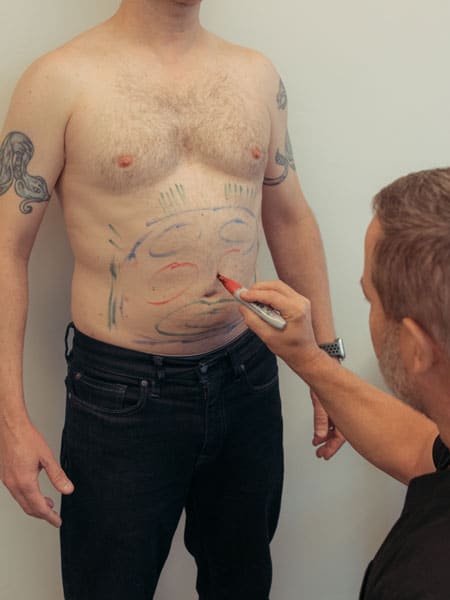
Tailor the surgical plan to fat type, target areas, and muscle definition. Mark natural muscle lines and zones for etching or enhanced contouring. Contemplate pre-tunnelling when fat is hard, which is a 20-minute step that frequently facilitates fat removal.
Some surgeons omit it, but it is advised for dense fibrous tissue. Talk about potential combined procedures, such as abdominal etching or gynecomastia, and consider the additional time and fluid shifts. In huge patients, staged operations are safer.
Discuss anesthesia choices, anticipated aspirate volumes, operative phases, and recovery markers. Make sure your patient understands the limitations of any classification system that uses preoperative aspirate estimates.
The Procedure Journey
A defined path to the destination serves to prime expectations and minimize apprehension pre and post male abdominal liposuction in the case of fibrous fat. The sections below walk through arrival, preparation, technique tweaks for fibrous tissue, and immediate post-op care.
The Day
Come fasting, in loose clothing that is simple enough to take off and put back on. Get a ride home. Do not drive yourself after sedation or anesthesia. Take just a few essentials and any necessary forms.
Preoperative checks consist of identity confirmation, consent forms, and a verbal run-through of planned areas. Staff take vital signs, including blood pressure, pulse, and oxygen saturation, and check for any recent health changes or new medications.
With the patient standing and then lying supine, markings are made on the abdomen to map contours, target areas, and incision points. Anesthesia selection is based on how much they’re doing. For small areas, tumescent local anesthesia with light sedation is common. For larger volumes or combined procedures, general anesthesia may be employed.
The team describes the anticipated degree of consciousness and pain management. Sterile setup follows: skin is cleaned with antiseptic, sterile drapes are applied, and instruments are laid out to reduce infection risk.
Procedure journey Easy cases can take less than an hour. More extensive work, multiple zones, or dense fibrous fat can push time to several hours. They monitor vitals continuously and adapt as needed.
The Technique for Fibrous Fat
Fibrous fat in the male abdomen is denser and tethered by connective bands, and this alters the surgeon’s technique. Surgeons often use a two-step approach: initial infiltration with tumescent fluid to soften tissue, then mechanical disruption before suction.
Small-gauge cannulas alone won’t cut it. The specialized cannulas with serrated edges or ultrasonic or laser-assisted energy actually cut up fibrous septa. The surgeon ‘feels’ the resistance of the tissue and alters stroke length and angle to steer clear of irregularities.
In locations adjacent to the umbilicus or lower abdomen where scarring or tight fibrous bands are common, gentle, controlled passes help mitigate contour deformity risk. For a patient with prior abdominal surgery, the plan may include limited undermining and slower suctioning to respect scar attachments.
If energy devices are utilized, they’re used sparingly to minimize thermal damage. The procedure provides even fat removal while preserving skin blood supply. The crew monitors fluid balance and blood loss, replenishing fluids as necessary.
The Recovery
Anticipate swelling and bruising to wane, with a crescendo during the first 48 to 72 hours. Some hardness or numbness can persist for months; feeling often returns gradually.
Wear compression garments as instructed, typically 24 hours a day for the initial two weeks then only during the day for a few more. Compression assists the skin in adjusting and decreases the likelihood of seromas.
No heavy lifting or strenuous exercise for at least 2 to 4 weeks. Light walking is recommended early on to reduce clot risk. Adhere closely to wound care, activity restrictions and medication regimens.
Report fever, increasing pain or excessive drainage right away.
Realistic Outcomes
Fibrous fat in the male abdomen transforms liposuction efficiency and results for patients. Fibrous tissue connects fat to adjacent structures, so contour optimization is typically slower and necessitates technique modification. The amount of muscle definition and overall sculpting varies based on fat type, skin quality, and diligent aftercare.
Small dents or little asymmetries can still appear despite technique, especially where fibrous bands refuse to let go of fat evenly.
Expectations
Most men see a flatter, more sculpted abdomen and cleaner body lines rather than a dramatic drop in weight. Early swelling and bruising peak within the first week and make the result hard to judge immediately. Noticeable contour changes appear within several weeks as swelling falls.
Ultimate smoothing and skin retraction take three to six months. Some firmness or numbness can linger in treated zones. Nerves and soft tissue need time to recover, and sensation often returns gradually.
Establish goals revolving around realistic outcomes, with more defined lines and more definition, not quick pounds shed. Recovery varies; many return to light work within a week, while heavy training usually resumes after four to six weeks.
Patients should anticipate ongoing modest betterment as far out as 12 months, when skin contracture and tissue settling can further optimize the result. Unnatural abdominal etching can result from overzealous or poor sculpting. This complication decreases patient satisfaction and should be eliminated by realistic planning.
Longevity
Liposuction fat cells don’t return, so results can be long-lasting when weight remains steady. Research indicates that weight gain above roughly 3 kgs is associated with diminished satisfaction as residual fat cells expand and change shape. Skin elasticity and age determine how long the appearance stays.
Younger skin, in particular, with good elasticity remodels better and exhibits prolonged shrinkage. Hold ground with a consistent diet and exercise to prevent the residual fat from growing.
Repeat procedures have mixed results. Those who undergo further liposuction tend to have a lower BODY-Q score, particularly if they chose a different surgeon the second time. That implies that some thoughtful upfront planning and conservative tissue removal might prevent sadness down the road.
Anticipate sagging and wrinkling to resolve over the months, a firm and stable appearance around three to six months, and subtle refinements for up to a year post surgery.
Beyond The Scalpel
Male abdominal fibrous fat is not the same as simple soft fat. It can often be located both superior and inferior to the abdominal wall, with separate pockets on either side of the midline. This irregularity can make contouring more difficult and lengthen recovery.
Liposuction eliminates the majority of subdermal fat, removing as much as 80% of the fat cells in that layer, but fibrous bands resist suction and can cause firmness or lumpiness for weeks. Swelling, firmness, and lumps are to be expected for the initial 4 to 12 weeks. Patients should anticipate this trajectory and be aware that a BMI under 30 is frequently recommended to improve the likelihood of an uncomplicated course.
Men often spend decades deciding due to societal taboo. Well-defined protocols that integrate surgical technique, adjunctive care, and lifestyle can compress that consideration.
Adjunctive Therapies
- Radiofrequency and ultrasound devices — These employ heat to stimulate collagen and achieve skin tightening following fat removal. Think of monopolar RF in clinic sessions and high intensity focused ultrasound as examples. Both assist in tightening dermal and subdermal layers, which is handy when residual mild skin laxity exists post-lipo. Treatment generally doesn’t start until a few weeks after surgery when all the swelling goes down.
- Lymphatic drainage massage — Soft, manual techniques decrease edema and shift fluid away from the treated regions. Beginning in the first week, brief sessions a few times a week accelerate recovery and reduce the incidence of long-term hardness. They get patients up walking the evening of surgery to minimize clot risk and encourage circulation.
- Topical and oral supports — Topical retinoids, vitamin C serums, and peptides can help support collagen on the surface. Oral supplements including vitamin C, zinc, and collagen peptides have plausible roles in healing, though evidence is mixed. Use under clinician guidance eliminates interactions and duplicate therapies.
- Role of adjunctive care — These therapies polish outcomes, smooth minor contour irregularities, and treat slow-healing patches. They are not without limits: infection, bleeding, and uneven contour remain potential hazards when expectations or technique are off. Mixing procedures — for example, a mini-tummy tuck for overhanging skin and liposuction for fibrous pockets — is common, particularly following massive weight loss that leaves behind sagging skin.
Lifestyle Integration
Balanced nutrition and exercise keep contour changes long-term. Don’t get caught in speed weight swings; fresh fat loves untreated zones. Establish realistic fitness objectives that complement the patient’s new physique and vitality.
Measure body stats, photos, and strength markers instead of scale weight alone. Tweak routines if fat comes back or new asymmetry emerges. For massive weight loss patients, look at abdominoplasty or lower body lift when laxity exceeds what non-surgical tightening can handle.
Conclusion
Fibrous fat within the male abdomen can bog down fat extraction and complicate the work. Experienced surgeons employ focused cannulas and precise methodology to slice through resistant tissue, safeguard skin and sculpt the abdomen. Anticipate an extended surgery time, increased local swelling and a fibrous feel in the recovery period. Pairing lipo with skin-release moves or energy devices can assist in some cases. Real care starts with an honest consult, straightforward objectives and transparent discussion of risks and recovery.
For a definitive next step, schedule a consult with a board-certified surgeon who has strong before-and-after examples of cases similar to yours. Bring pictures of what you want and inquire about the technique, recovery time, and care of scars.
Frequently Asked Questions
What is fibrous fat in the male abdomen?
Fibrous fat is dense, fibrous tissue intermixed with fat. It is rubbery and won’t suction. It tends to come after weight bounce, aging, or previous inflammation.
Can standard liposuction remove fibrous fat?
Traditional suction-assisted lipo does not work well on fibrous fat. Power-assisted or ultrasonic techniques work better. Surgeons pick tools depending on whether the tissue is firm or if they need to be safer.
Which liposuction techniques work best for fibrous fat?
Power-assisted (PAL), ultrasound-assisted (UAL), and laser-assisted (LAL) lipo disrupt fibrous fat in the male abdomen. Hybrid methods enhance fat liberation and sculpting in stubborn zones.
How is pre-surgical assessment done for fibrous fat cases?
Surgeons evaluate skin quality, fat density, and medical history. Imaging and physical exam guide technique choice. Clear expectations and risks are confirmed before surgery.
What should I expect during recovery after fibrous fat liposuction?
Anticipate mild swelling and bruising for 1 to 4 weeks. Compression garments assist the healing process. Soft tissue treatments may be needed to smooth skin irregularities or address laxity.
Are the results permanent after removing fibrous fat?
Fat cells that are removed don’t come back, but fat that’s left can get bigger. Long term results are going to be dependent on diet, exercise, and a stable weight. It requires upkeep.
What risks are specific to treating fibrous fat?
There are risks of uneven contours, extended swelling, and skin abnormalities. Selecting a skilled plastic surgeon minimizes these risks and enhances cosmetic results.