


Key Takeaways
-
GLP-1 medications lead to quick weight loss, which in turn can cause a loss of subcutaneous fat around the buttocks. This results in a flattened shape, sagging skin, and weird proportions. Evaluate how these changes impact comfort and clothing fit.
-
Fat transfer replaces volume by transferring fat from donor areas to your buttocks and can enhance its contour and support when done by a skilled board-certified surgeon.
-
Best candidates are at stable weight, have adequate donor fat, and are in good health otherwise. Those with significant skin laxity may require adjunctive skin-tightening or lift procedures.
-
Recovery involves not sitting directly on the grafted area, wearing compression garments, and adhering to post-op instructions to ensure maximum fat survival and minimize complications.
-
Know surgical risks like infection, contour irregularities, and partial fat necrosis, and prepare for realistic results which might involve touch ups.
-
Maintain long-lasting results with balanced nutrition, hydration, glute strengthening exercise, consistent weight management, and skin care.
Fixing Ozempic butt with fat transfer is a surgical solution to regain volume diminished by weight loss or medication.
Fat transfer utilizes a patient’s own fat, harvested by liposuction, then grafted into the buttocks to provide shape and fullness.
Outcomes vary based on surgeon expertise, fat viability, and care after surgery. Candidates must have steady weight and feasible goals.
The body covers risk, steps, recovery, and cost.
Understanding The Change
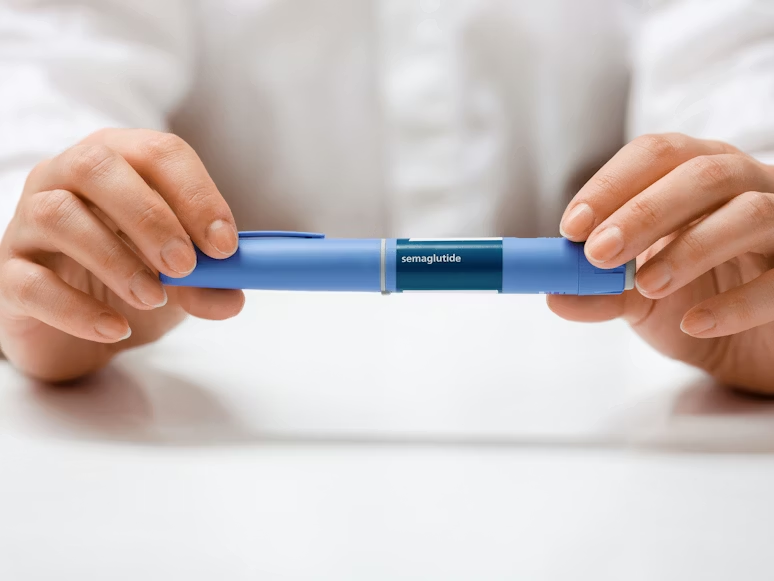
Rapid fat loss from semaglutide (branded as Ozempic, Wegovy, and other GLP-1 drugs) can cause selective changes to subcutaneous fat stores that manifest most noticeably in the buttocks. When one drops 10 kilograms or more, the skin with the underlying fat can shrink faster than the skin retracts, leaving a deflated appearance sometimes referred to as “Ozempic butt.” Here’s how that happens, what it looks like, and how patients often feel about the change.
The Cause
Semaglutide and other GLP-1 meds slash appetite and shift metabolism, accelerating total fat loss. Fat loss is very rarely even, with areas like the buttocks losing more volume because of local fat cell responsivity and low muscle mass. Fast fat loss can cause skin to become stretched and loose because once the skin has been stretched for years, there’s very little elastic recoil, which leads to sagging and a flattened appearance.
Genetics, age and initial skin quality modify how much sagging becomes visible; older or collagen-poor skin recoils less. Of course, if you started out with less gluteal muscle, losing fat will make that volume loss more obvious. Building muscle can camouflage some loss but can’t always restore skin that has already failed to retract.
The Effect
Visibly, the changes manifest as a flatted, “pancake” butt, more wrinkling, more pronounced looking cellulite and sagging tissue that shifts the silhouette. As these natural curves flatten, cushioning diminishes. You might find yourself experiencing pain sitting on hard benches or chafing where there used to be padding.
What happens is your clothing fit changes. The waist to hip ratio gets smaller, your pants fit differently, and some items you will want a different size or tailor. Beyond the physical, many report lowered confidence and frustration: they wanted weight loss for health or appearance but dislike the new buttock shape. That psychological toll can take a hit on both motivation and quality of life.
The Psychology
It’s an emotional cocktail. Relief or pride from weight loss but horror over a new, unwanted visage. This friction can induce shame or hesitation to pursue treatments even when they improve metabolic health. Body image concerns erode mental health and deplete willpower, which makes sustainable habits more difficult to uphold.
Managing expectations helps: explain that prevention—exercise like squats, glute bridges, and weighted hip thrusts to build muscle—may reduce but not always reverse changes and that surgical options such as fat transfer are tailored solutions when volume loss is significant. Open conversation with clinicians and mental health support is key to process both physical and psychological impact.
The Fat Transfer Fix
Fat transfer, commonly referred to as a Brazilian butt lift (BBL) or lipofilling, is a popular choice for addressing “Ozempic butt,” which is the loss of buttock volume and skin laxity post-weight loss. The fat transfer fix relocates fat from donor areas, typically the stomach or thighs, to the buttocks to reinstate curves, support skin and enhance shape.
At the cutting edge, skilled surgeons concentrate on small incisions, careful graft handling and strategic placement to achieve natural results with minimal scarring.
1. The Procedure
The procedure starts with tiny incisions and liposuction to gather fat, typically with a laser instrument that first agitates fat cells and then sucks them up for a cleaner harvest. Surgeons purify and concentrate the fat. This removes fluid and damaged cells to increase the likelihood the grafts will survive.
Purified fat is then transplanted into several layers and planes in the buttock to provide even contour and support. Majority of instances are completed under anesthesia at a plastic surgery center, with rapt observation the entire time.
Strategic placement bypasses lumps and provides a more natural projection. Pairing fat transfer with skin-tightening or body-contouring treatments helps sculpt the final shape when there is tissue laxity.
2. The Candidacy
The perfect candidates have sufficient fat in donor areas to be transferred. If you don’t, your surgeon may recommend implants or staged procedures. Candidates should have a consistent weight and be in excellent general health to minimize surgical risk and aid graft survival.
Extreme skin laxity or lack of fat stores can limit results. Such patients may require additional skin-tightening procedures or different strategies. A comprehensive history review, lifestyle, and aesthetic goals help establish realistic expectations and whether fat transfer BBL is right.
3. The Preparation
Keep it consistent in the months leading up to surgery for enduring results. Patients must discontinue some medications and supplements at the surgeon’s instruction to reduce bleeding risk and other complications.
Prepare home for rest: have firm pillows, compression garments, and help for daily tasks. Adhere to all pre-op instructions from the clinic, including smoking cessation advice, to minimize the possibility of complications.
4. The Recovery
There will be some initial swelling, bruising, and soreness. Do not sit directly on your buttocks for a few weeks. This assists the fat transfer to grow a new blood supply. Compression garments alleviate swelling and help to preserve new contours as tissues heal.
Recovery times are different. Most patients notice their final results after the swelling subsides, which is generally within 3 to 6 months when the fat grafts fully take.
5. The Results
Results develop over a few weeks. There’s instant transformation, but it gets better as the fat settles and establishes its own blood supply. It takes roughly 6 months for injected fat cells to acquire a new blood supply and demonstrate final shape.
With stable weight and healthy habits, results are long-lasting and do a great job replacing lost curves. Take progress photos to monitor changes and maintain realistic expectations.
Risks and Realities
Surgical intervention to correct an “Ozempic butt”—the saggy butt skin that can come after accelerated, medically aided weight loss—has understandable advantages and definitive constraints. All surgical options come with risks including infection, fat necrosis, and asymmetry. Knowing these risks and the high probability of requiring revisions is important.
Select a board-certified plastic surgeon who specifically has expertise with fat transfer and body contouring to minimize unnecessary complications and optimize results.
Potential Complications
Infection is a typical surgical risk and can be anywhere from superficial wound nuisances to deeper infections necessitating antibiotics or additional surgery. Fat embolism is less common but serious. Improperly injected fat can enter the bloodstream and obstruct vessels.
Contour irregularities, or uneven lumps or depressions, are common post fat grafting and frequently mirror uneven fat survival or fat placement technique. With implants in conjunction with transfer, implant rupture or capsular contracture become additional considerations.
Minor swelling and bruising are common. Anticipate post-operative swelling, bruising, and discomfort during the first one to two weeks after a Brazilian butt lift as these symptoms usually abate but can be prolonged in some patients. Extended recovery may impact work and travel, so plan accordingly.
Necrosis and severe capsular contracture with implants that can require emergent care or removal of the implant remain rare but serious risks. Be on the lookout for fever, escalating pain, abnormal drainage, shortness of breath, or color and temperature changes in your limb and alert your surgical team right away. Early detection makes treatment more likely to be successful.
Realistic Limitations
Fat transfer cannot totally reverse deep skin laxity or extreme volume loss in all instances. When excess skin folds linger after weight loss, as is common among patients after massive weight loss programs, fat by itself won’t firm loose skin sufficiently to return to a smooth contour.
More than 40% of American adults are obese and many who lose weight, sometimes quickly with drugs like semaglutide, develop massive cascading folds of sagging skin that require more than grafted fat. The outcome differs by body structure, skin quality, and patient adherence to aftercare.
Not all the transferred fat survives. Average survival rates vary and some patients require revision surgery to achieve optimal shape. Some may need skin excision work or a lower body lift to remove excess tissue.
Post-surgery weight stabilization is a must. Weight gain or loss can alter the fat graft and skin tension, possibly reversing advantages. Do not sit directly on your buttocks for approximately two to three weeks to promote graft survival and decrease pressure on transferred cells.
Beyond The Procedure
Fat transfer corrects volume loss. Long-term success is in the care beyond the procedure. A holistic plan connects nutrition, skin health, strength training, and weight management to keep results looking natural and lasting. Most patients experience ‘ozempic butt’ following swift or significant weight loss, which can occur at any age and potentially indicates the areas where an individual’s physique and genetics favor fat reduction.
Treating that underlying muscle loss and lax skin is what makes a fat grafted result hold up better over time.
Nutritional Support
Protein-centric meals help with graft survival and muscle regeneration. Protein is best spread throughout the day to encourage consistent muscle growth. Incorporate lean meats, legumes, dairy, or fortified plant alternatives into every meal. Collagen-boosting nutrients like vitamin C, zinc, and amino acids assist with skin and tissue repair.
Water is essential. Drink no less than half your weight in ounces every day to keep tissues supple and promote healing.
-
Breakfast includes Greek yogurt or tofu scramble, whole-grain toast, fruit rich in vitamin C, and a glass of water.
-
Mid-morning snack: A handful of nuts or a protein shake with added collagen peptides.
-
Lunch: Grilled fish or a chickpea salad, mixed greens, quinoa, and a citrus dressing.
-
Afternoon snack: Cottage cheese or hummus with veggies, plus water.
-
Dinner includes lean protein, steamed vegetables, and sweet potato for slow carbs and micronutrients.
-
Evening: A small portion of casein-rich food like cottage cheese or a plant alternative aids overnight repair.
Skin Health
Daily skin care maintains tone over the grafted area and adjacent skin. Apply moisturizers with hyaluronic acid or ceramides to aid in barrier function and combat post weight loss and surgical dryness. Frequent exfoliation and manual massage increase circulation and can minimize the appearance of cellulite and encourage lymphatic flow during recovery.
Non-invasive tightening possibilities like radiofrequency and ultrasound can provide structural support without new surgery.
-
Moisturizers: hyaluronic acid serum, ceramide-rich cream.
-
Topicals: vitamin C serums, retinol (post-healing, low strength).
-
In-office: radiofrequency treatments, ultrasound tightening sessions.
-
Home care: dry brushing, lymphatic massage, sun protection.
Mindful Maintenance
Establish a regular training schedule, incorporating full-body and glute-specific strength training. As for resistance training, glute and lower body focused workouts are great for maintaining and rebuilding muscle mass during and after weight loss.
A physical therapist can help construct a safe, progressive strength program based on recovery timelines. Anticipate surgical downtime anywhere from a few days to 2 weeks depending on severity and recovery.
-
Daily habits checklist:
-
Hydrate based on weight.
-
Consume protein at every meal.
-
Perform prescribed strength or PT exercises.
-
Apply moisturizer and massage gently.
-
Monitor weight weekly and correct habits as soon as possible.
-
Alternative Options
If you’re a patient who is interested in correcting Ozempic butt flattening, you do have options when fat transfer isn’t appropriate or you want something different! Here are the nonsurgical and surgical options, with indications, advantages and disadvantages, and anticipated outcomes.
Non-Surgical
Injectable fillers and regenerative adipose fillers are temporary to semi-permanent choices for minor volume loss. Sculptra (poly-L-lactic acid) boosts collagen and can provide gradual volume over months and complement exercise for a plumper appearance.
Regenerative adipose fillers utilize processed fat-derived tissue. They may have greater longevity than hyaluronic acid but are less predictable than surgical fat transfer.
Skin tightening devices treat laxity without adding much bulk. Radiofrequency microneedling tightens mild sagging skin and enhances texture. It will not seriously alter buttock volume.
Renuvion applies helium plasma alongside radiofrequency energy for more pronounced skin tightening and can be beneficial when there is loose skin but in moderate amounts. Other RF or ultrasound devices provide incremental firmness with minimal downtime.
Cellulite treatments and lotions make the surface look healthier. Injectable or energy-based platforms for cellulite can smooth dimples. Retinoid or peptide-containing topicals provide a mild textural advantage but require consistent application.
Pros: lower cost, minimal downtime, lower risk of anesthesia-related events. Cons: results are often temporary, require repeat treatments, and have limited ability to correct significant sagging or volume loss.
Maintenance is common with fillers. Tightening devices often require a series of treatments and occasional touch-ups. Recommended for mild to moderate issues, patients in search of short-term transformations, or those who are averse to surgery.
Surgical
Surgical options are best for those with significant sagging, excess skin, or significant volume loss. Tock lift and body lift excise excess skin and re-drape tissue into a higher, smoother position. This is the dependable option for loose skin as opposed to volume modification.
Implants provide a long lasting, reliable gain in projection and volume compared to a BBL fat transfer. A Brazilian Butt Lift is incredibly versatile. It not only sculpts donor areas using liposuction but transfers fat to contour the buttocks.

Many surgeons pair BBL with lifts or liposuction for complete contouring. Implants can be used when there is not enough donor fat or when one desires a permanent shape.
Surgical pros include lasting results, the ability to address both volume and excess skin, and allow comprehensive body contouring. Cons include longer recovery, higher upfront cost, and increased surgical risk.
Opting for a skilled surgeon and meticulous preoperative preparation is a must.
|
Treatment |
Indication |
Expected Outcome |
|---|---|---|
|
Fillers / Sculptra |
Mild volume loss |
Gradual, temporary fullness |
|
Regenerative adipose filler |
Mild-moderate loss |
Semi-permanent volume, variable |
|
Minor sagging |
Improved texture, limited lift |
|
|
Renuvion |
Loose skin |
Noticeable skin tightening |
|
BBL (fat transfer) |
Volume + contouring |
Customizable, variable longevity |
|
Butt implants |
Lack of donor fat, desire permanent |
Predictable, permanent projection |
|
Buttock/body lift |
Severe sagging, excess skin |
Remove skin, lift and reshape |
Financial Considerations
Volume loss after weight loss or GLP-1 use repair decisions impact results and expense. Here are the key financial considerations to balance when comparing fat transfer, surgical lifts, and non-surgical options, with concrete examples and figures to inform your planning.
Surgical fat transfer (autologous fat grafting) typically involves surgeon fees, operating room fees, anesthesia, and follow-up. Typical ranges for surgeon and facility combined often fall between 6,000 and 15,000 USD depending on case complexity and location. Tock lift surgery can be higher when combined with excess skin removal or body contouring, often 8,000 to 20,000.
Non-surgical options like fillers, fat-dissolving injections, and energy-based skin-tightening exist. Per session costs run from approximately 500 to 3,000. Several non-surgical options require multiple visits. Results last 1 to 2 years for some, so expenses are ongoing.
Factors that change price include surgeon expertise. Board-certified plastic surgeons in major urban centers charge more than less-experienced providers or those in smaller markets. Facility fees depend on the venue. Hospital-based operating rooms are pricier than accredited outpatient surgical centers.
Location drives base costs, with metropolitan areas in industrialized nations often occupying the upper echelons of prices. Case complexity raises cost. Large volume grafting, combined procedures such as liposuction and lift, or corrective revision after prior surgery add hours and resources.
Your patient’s health and BMI will impact your anesthesia needs and post-op care, which fluctuate based on cost. Budget for extras and potential changes. Consider pre-op tests, garments, pain meds, and follow-up visits. Allow 5 to 15 percent of the surgery cost for on-the-spot add-ons.
Temporary lost work or travel to a specialist is an additional indirect cost. A week off work plus travel to a specialist can add several hundred to a few grand. Revision surgery isn’t uncommon. A few require touch-ups or a bit of fat grafting to get the shape just right.
Budget an additional 20 to 50 percent of your surgical upfront cost if you want a safety margin.
Estimated cost table
|
Procedure type |
Typical per-procedure cost (USD) |
Notes on longevity |
|---|---|---|
|
Fat transfer (single session) |
6,000–15,000 |
Permanent fat grafts, some resorption expected |
|
Buttock lift |
8,000–20,000 |
Addresses excess skin; durable |
|
Dermal fillers (per session) |
1,000–3,000 |
Often lasts 1–2 years |
|
Energy-based tightening |
500–2,500 per session |
Multiple sessions; effects vary 1–2 years |
|
Touch-up/revision |
20–50% of initial cost |
Depends on scope |
Financial considerations indicate that coverage is uncommon unless a procedure is medically necessary — most cosmetic volume replacement is cash-pay. Compare long-term cost-effectiveness. A higher upfront surgical cost may be less expensive than repeated non-surgical sessions over several years. Choose according to your budget and style preferences.
Conclusion
Body shape can pivot with weight loss and drugs like semaglutide. Fat transfer provides a direct solution to bring the volume back. The surgery transfers fat from somewhere to the butt, so the area appears fuller and more balanced. Recovery is a matter of weeks. Anticipate some swelling, a temporary reduction in activity, and post-op check-ups. Scars remain tiny. The results can last for years if your weight remains stable.
For other folks, fillers or implants suit better. For some, non-surgical options assist minor hollows. Verify surgeon experience, request to view before and after pictures, and verify follow-up care and fees. If health or budget preclude surgery, try strength work and custom nutrition first.
If you need assistance weighing options or locating a board-certified surgeon, request a local consult or submit your questions.
Frequently Asked Questions
Can a fat transfer fix butt volume lost from Ozempic (semaglutide)?
Yes. Fat grafting, which involves liposuction and transfer, can bring the volume back. Results vary based on donor fat availability and patient healing. Check with a board certified plastic surgeon for your individual evaluation.
How long do fat transfer results last for Ozempic-related loss?
Fat grafts tend to be long-term. Be prepared for some initial shrinkage. Roughly 60 to 80 percent of transferred fat typically survives long-term. Lifestyle and weight fluctuations impact final results.
Is fat transfer safe after Ozempic use?
Fat transfer is generally safe in the hands of a skilled surgeon. Risks include infection, asymmetry, and fat reabsorption. Reveal existing and previous prescriptions, including Ozempic, during your consultation.
When is it safe to have surgery after stopping Ozempic?
Some surgeons suggest waiting 4 to 12 weeks after discontinuing GLP-1s, but advice differs. Adhere to your surgeon’s and prescribing doctor’s orders to minimize surgical and healing risks.
What are non-surgical alternatives to restore butt volume?
Your choices are pretty much limited to focused strength training, eating more to add fat, and dermal fillers. Results are subtler than fat transfer and may require maintenance.
How much does butt fat transfer typically cost?
Prices range significantly by location and surgeon. Anticipate a spectrum based on complexity and facility fees. Receive comprehensive quotes from board-certified surgeons that include anesthesia and aftercare.
Will insurance cover a fat transfer for Ozempic-related changes?
Unlikely. Cosmetic fat transfer is generally elective and not covered. If changes induce medical problems, consult your insurer and obtain documentation from your physician.
